

A placemat sits under every plate you serve. Guests touch it before they touch the food, servers wipe it dozens of times a week, and it is in every photo taken at the table. Choosing the wrong material means stained mats after a month or a reorder every season.
This guide compares the five materials restaurants actually use, shows which one fits which type of venue, and gives you the numbers to calculate the real cost of each option.
Quick answer: which placemat material is best for restaurants?
For most full-service restaurants, genuine leather or high-quality faux leather placemats give the best balance of durability, easy cleaning and look. Vinyl wins on price for high-volume casual dining. Fabric works for boutique venues with in-house laundry. Paper is a one-time cost per guest and only makes sense for quick-service and events.
Restaurant placemat materials compared
| Material | Look and feel | Cleaning between guests | Typical service life | Best for |
|---|---|---|---|---|
| Genuine leather (Crazy Horse, Capri) | Premium, warm, ages well | Damp cloth, dry wipe | Years with basic care | Steakhouses, fine dining, hotel restaurants, wine bars |
| Faux (PU) leather | Leather look, uniform color | Damp cloth, mild cleaner | Shorter than genuine leather | Bistros, cafés, brunch spots, multi-location brands |
| Vinyl / PVC | Practical, plastic feel | Any cleaner, very fast | Medium | Family restaurants, diners, outdoor seating |
| Fabric (linen, cotton) | Soft, homely | Laundry after each service | Depends on washing cycles | Boutique and seasonal venues with laundry service |
| Paper | Disposable | Thrown away | One meal | Quick service, events, kids' menus |
Is leather good for placemats?
Yes, if you choose the right leather. Restaurant tables need a material that resists spills for the length of a meal, wipes clean in seconds and does not curl at the edges.
Genuine leather. Dense, flexible hide with a natural surface. Two finishes are common in hospitality:
- Crazy Horse leather has a waxy, slightly distressed surface. It develops a patina with use, so small marks read as character rather than damage. This is the forgiving choice for busy dining rooms.
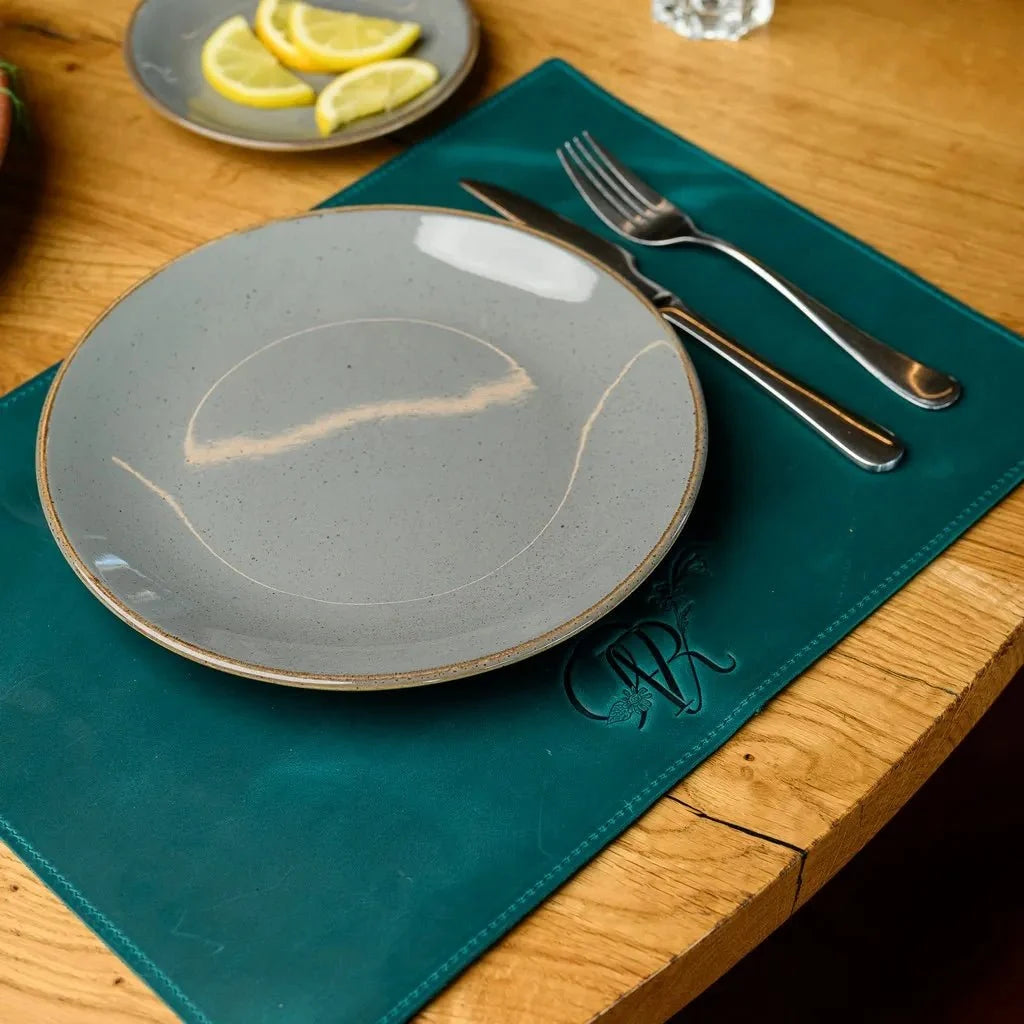
- Capri leather has a smooth, even finish and a cleaner, more formal look. It suits minimalist interiors and white-tablecloth service.
Faux (PU) leather. A polyurethane coating on a textile base. It looks like leather, costs less and needs no conditioning. Its weak point is the coating: heat, friction and harsh cleaners eventually crack it, and that damage cannot be repaired.
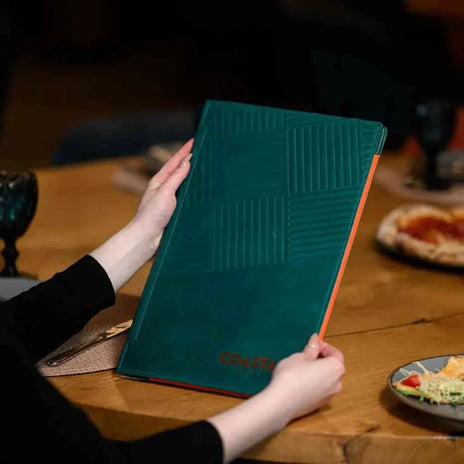
Our experience with leather menu covers in working restaurants is a useful benchmark: genuine leather outlasts good-quality PU. Placemats take more wear than covers, so expect shorter cycles for both, but the gap between the two materials stays the same.
One rule for any leather placemat: never leave it wet. Wipe spills during service and dry the surface before the next guest. Moisture left overnight and alcohol-based sanitizers are what crack leather, not daily use.
Which placemat fits your restaurant format?
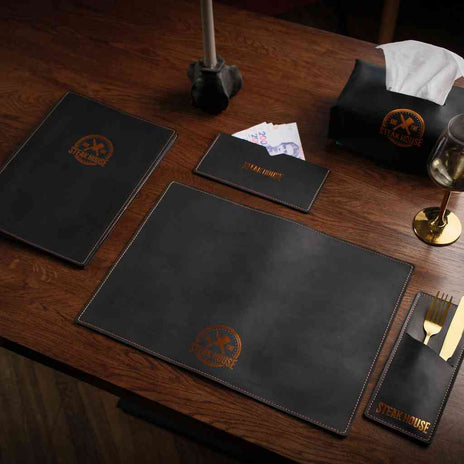
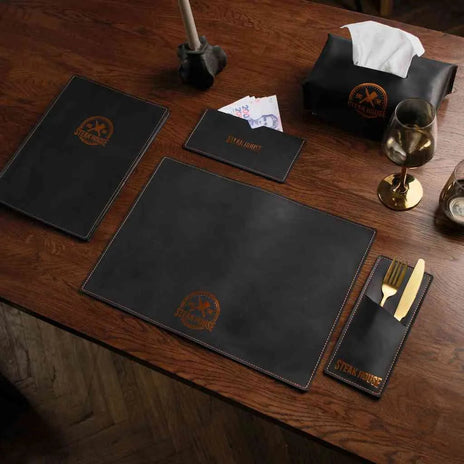
Steakhouse and grill. Heavy plates, steak knives, sauces. Choose thick Crazy Horse leather in dark tones: brown, black or bordeaux. Marks blend into the patina, and the material matches wood and cast-iron serving ware.

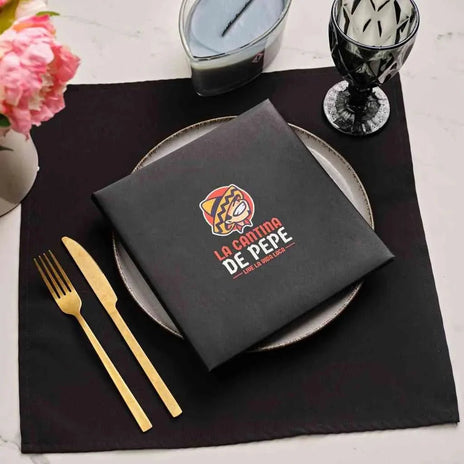
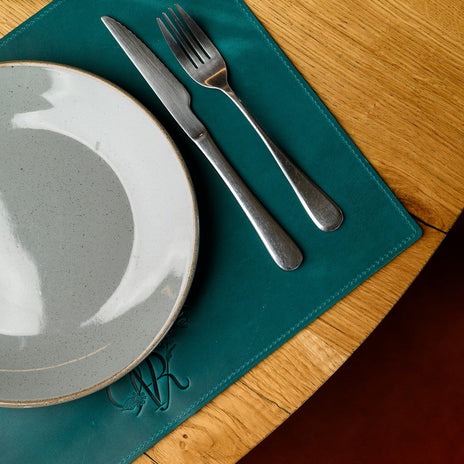
Fine dining and hotel restaurants. Smooth Capri leather in black, navy or sand, with a blind-debossed logo. The goal is a quiet, consistent table where the plate is the focus.
Beer pubs and bars. A long, narrow beer placemat holds a flight of glasses and a snack board without crowding the bar top.

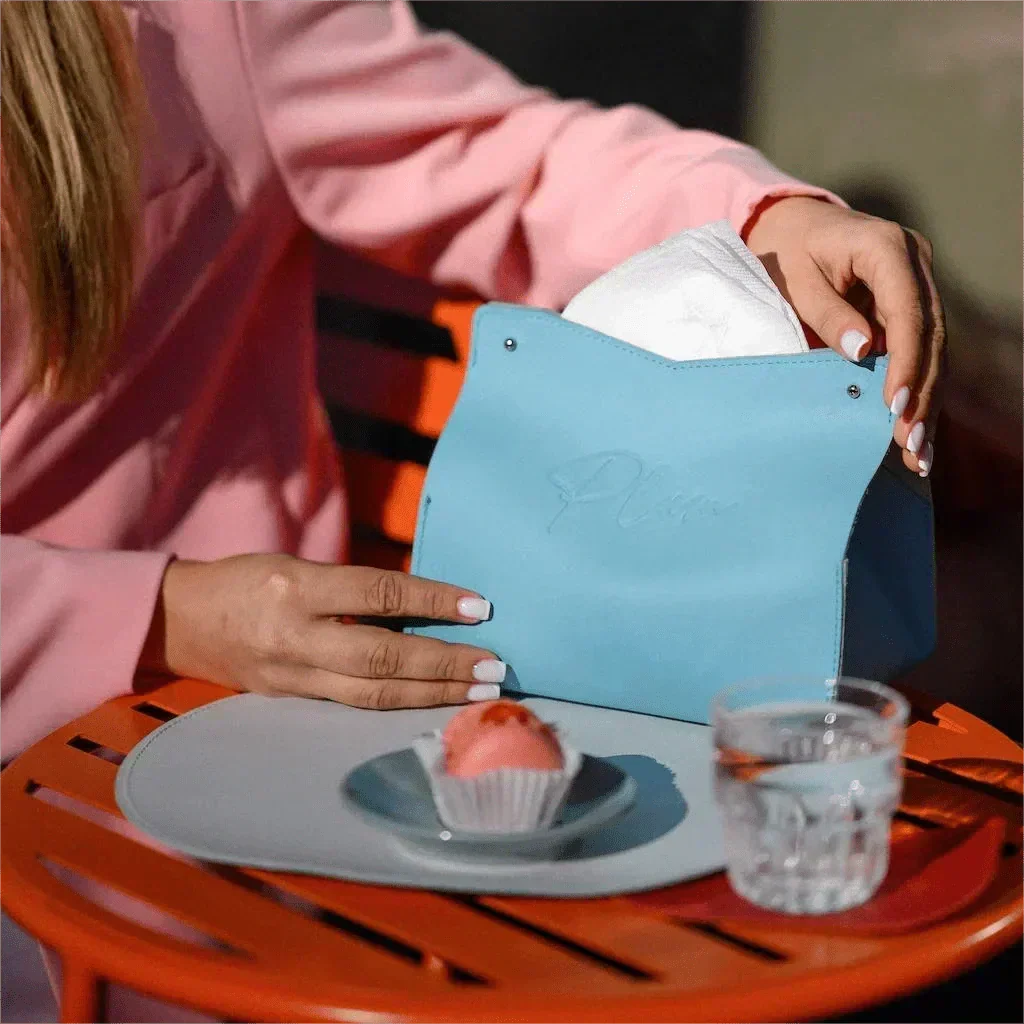
Cafés, brunch and bistros. Round or teardrop placemats on small tables leave room for cups and saucers. Faux leather keeps cost down when you seat many covers on small tables.

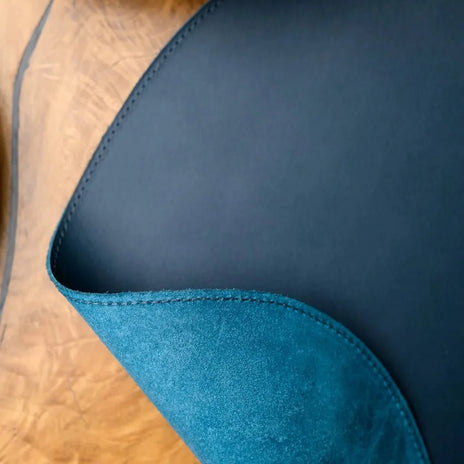
Family restaurants and outdoor terraces. Double-sided faux leather or vinyl. Turn the mat over for a different color or for a quick fix when one side is stained mid-service.
Shop the full range of leather placemats for restaurants: rectangular, round, teardrop and beer formats in genuine and faux leather.
What size is a standard restaurant placemat?
The most common rectangular size in the US is around 18 × 12 in. Restaurants with tighter tables often go slightly smaller so the mat does not overhang the edge or overlap the next setting.
| Format | Size | Where it works |
|---|---|---|
| Standard rectangle | 18 × 12 in | Large two- and four-tops |
| Compact rectangle | 16.5 × 11.8 in (420 × 300 mm) | Most restaurant tables, booths |
| Beer / bar runner | 20.9 × 9.1 in (530 × 230 mm) | Bar tops, beer flights, tasting sets |
| Round | by table size | Round tables, cafés, brunch |
| Teardrop / oval | by table size | Small tables, design-led interiors |
A simple check before you order: allow about 24 in of table width per guest. If two mats plus 2–3 in of gap do not fit across a two-top, choose the compact or round format.
How to clean and care for leather placemats
- During service: blot spills immediately with a dry cloth. Do not rub.
- Between guests: wipe with a cloth dampened in clean water, then dry.
- End of day: mild soap solution for greasy marks, dry flat. Never stack wet mats.
- Every few months: apply a leather conditioner to genuine leather. Faux leather needs no conditioning.
- Avoid: alcohol-based sanitizers, bleach, dishwashers, hot pans placed directly on the mat.
The real cost of a placemat: price per guest
The sticker price is the wrong number to compare. Compare how many meals a reusable placemat must serve before it costs less than buying paper mats.
Example with assumptions you can replace with your own: paper placemats at 5¢ each, one seat serving 2 guests a day.
| Option | Price per seat | Meals to match paper | At 2 guests a day |
|---|---|---|---|
| Genuine leather placemat (rectangular LP001, Capri) | $19.40 | 388 | about 6.5 months |
| Faux leather placemat (rectangular, double-sided) | $13.00 | 260 | about 4.5 months |
| Paper placemat | 5¢ each | one meal | a new one every meal |
At 2 guests a day, 360 days a year, paper at 5¢ costs $36 per seat per year. Every meal a reusable placemat serves after the break-even point costs you only the time to wipe it, and the table looks the same for every guest. Prices are for one piece before volume discounts; see the placemats collection for all shapes and current prices.
Branding: putting your logo on placemats
A logo on the placemat is in front of the guest for the entire meal and in every overhead food photo.
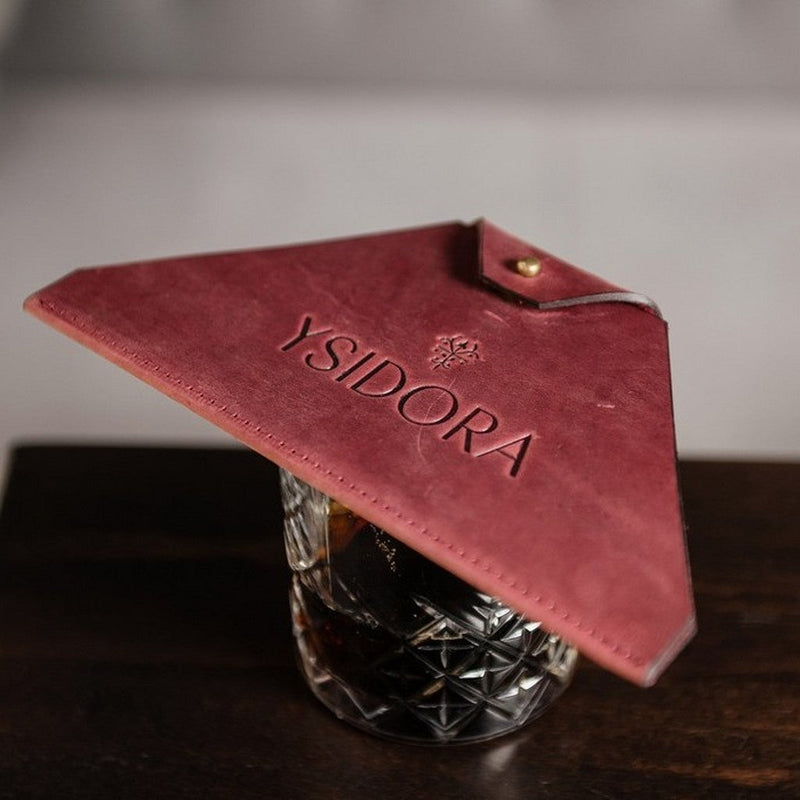
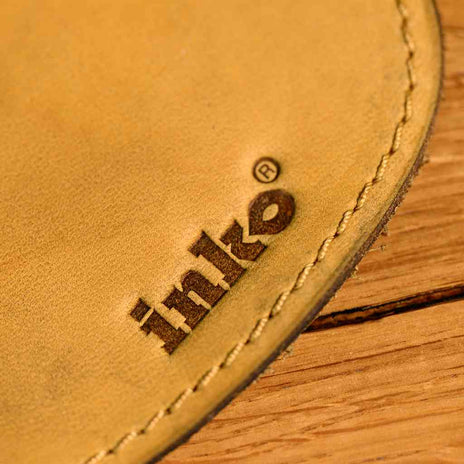
- Debossing on leather: the logo is pressed into the surface. Choose blind (no color) for a quiet premium look, or gold, copper, silver or black foil for contrast.
- UV printing on faux leather: full-color logos, patterns or a short message, useful when the logo has several colors.
- Files: send the logo in vector format (.ai, .cdr, .eps or .svg) so the edges stay sharp at any size.


Keep the logo small and in one corner, about 1.5–2 in wide. A large central logo is covered by the plate.
Build a matching table set
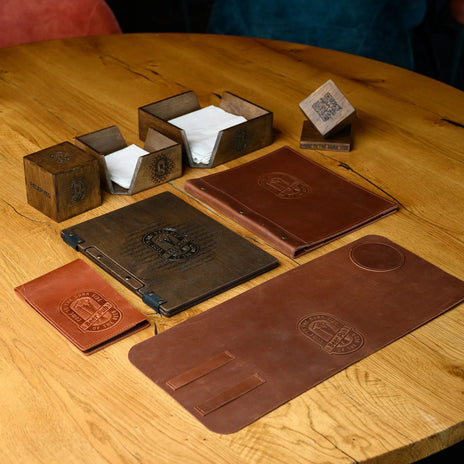
Guests read the table as one picture. Placemats look more expensive when the leather and color repeat across the setting:
- leather coasters in the same leather;
- placemat and coaster sets;
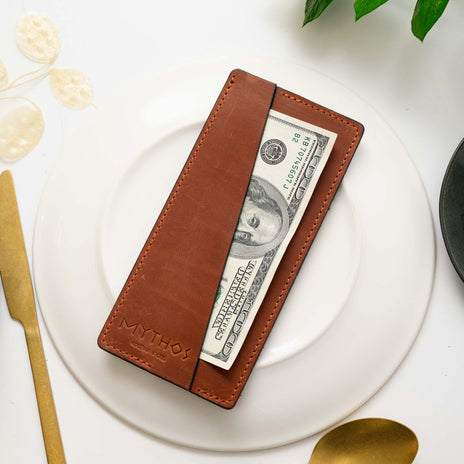
- leather check presenters for the end of the meal;
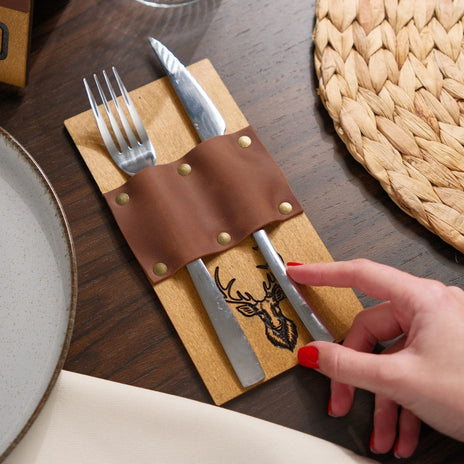
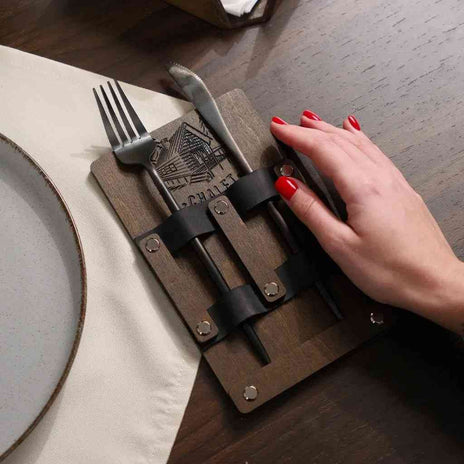
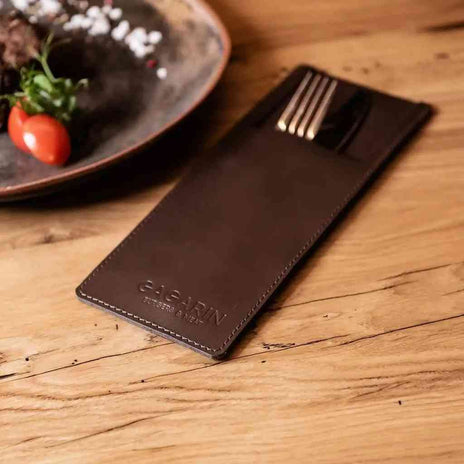
- leather cutlery holders;
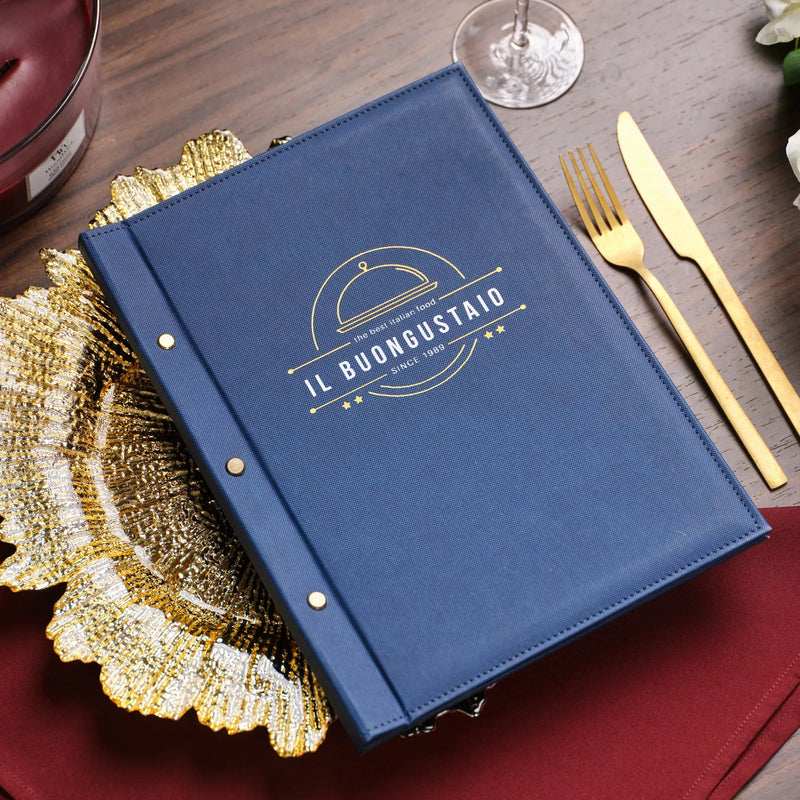
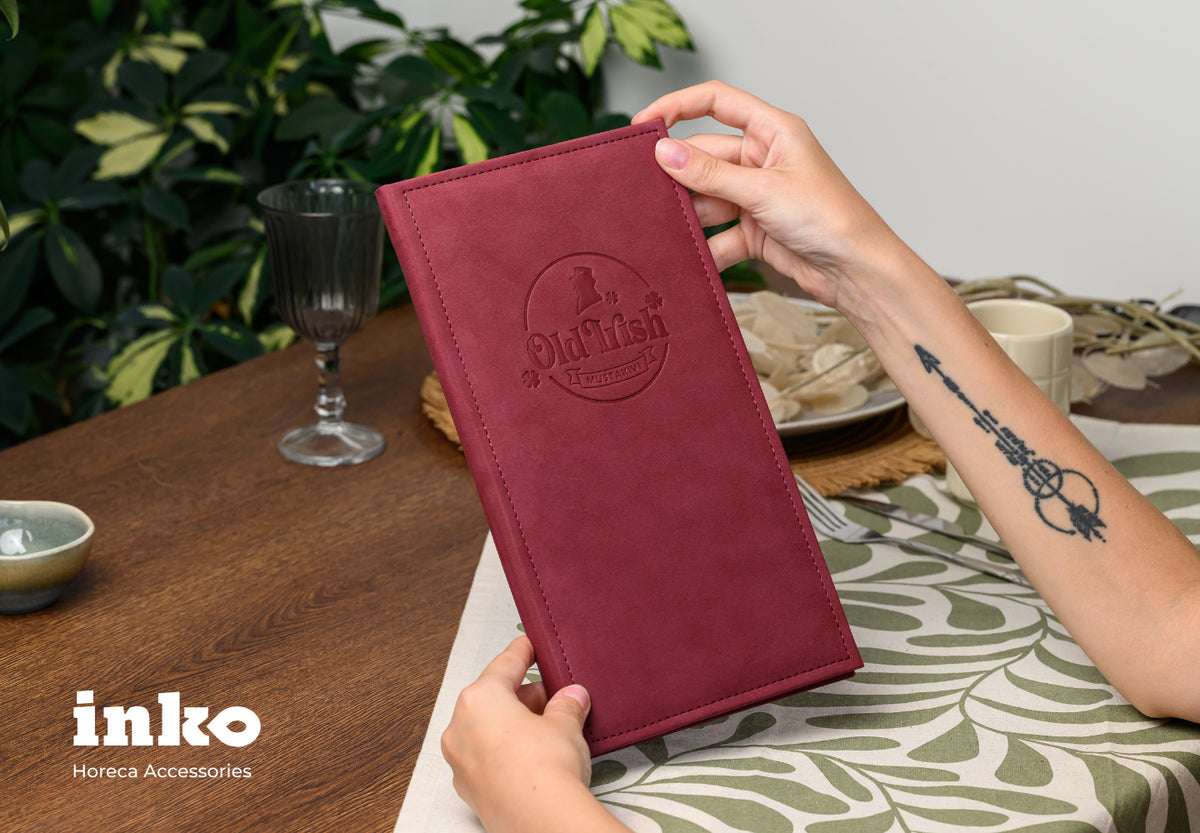
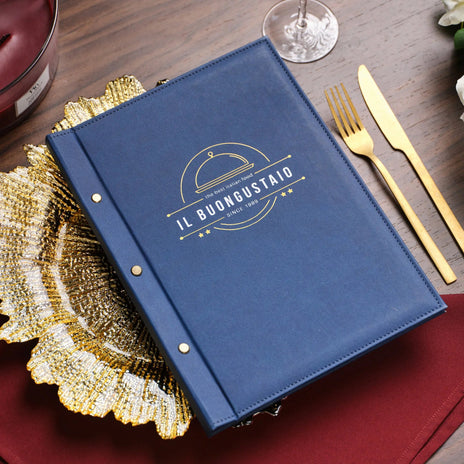
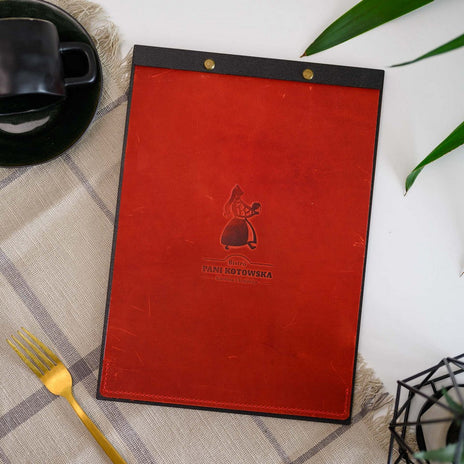
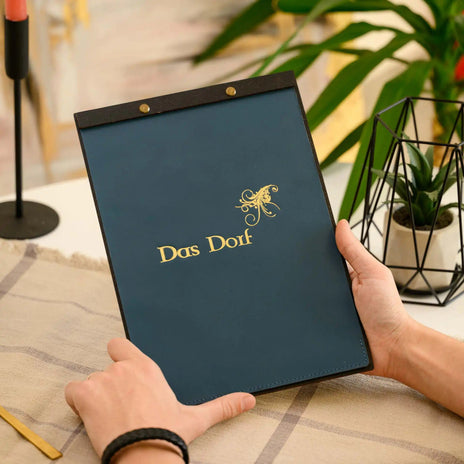
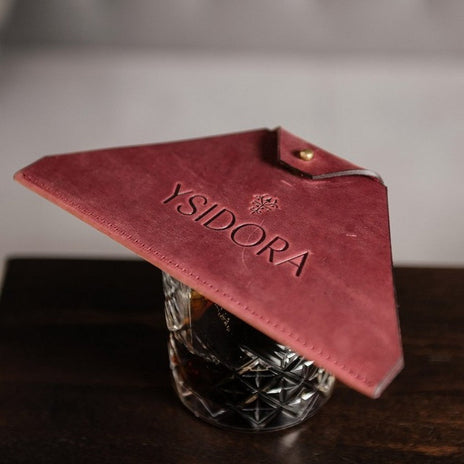
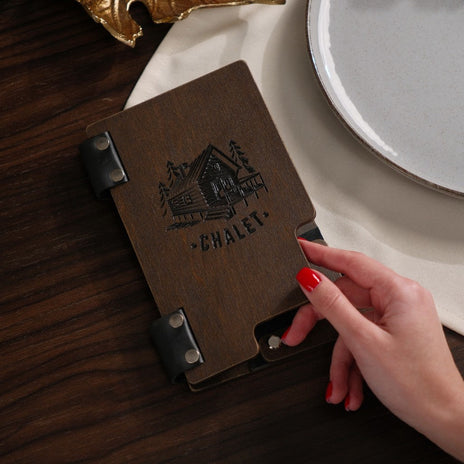
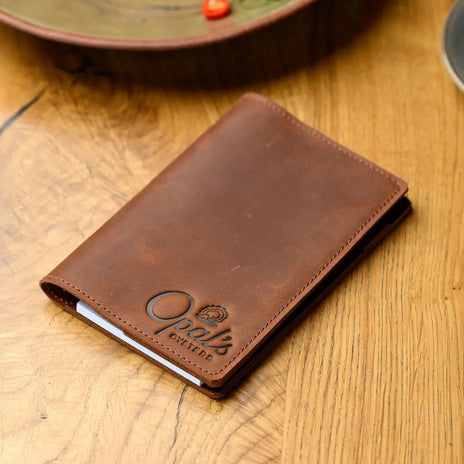
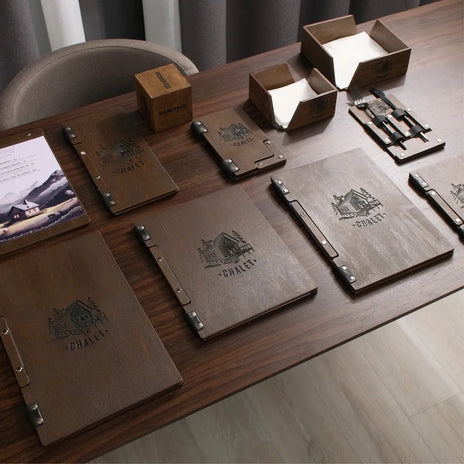
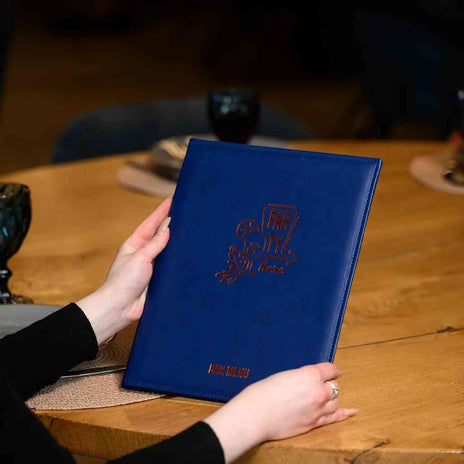
- leather menu covers to open the meal in the same material.

Not sure about the shade? Order a sample box and check the leather colors under your own lighting before you place the full order.
Checklist before you order restaurant placemats
- Count seats and add 10–15% spare mats for rotation and replacements.
- Measure the smallest table: two mats plus a gap must fit.
- Choose the material by format: genuine leather for premium, faux leather or vinyl for high turnover.
- Pick colors that work with your tabletop and plates; check samples in your lighting.
- Prepare the logo in vector format and decide on debossing or UV print.
- Add matching coasters, check presenters and cutlery holders in one order.
- Plan the timeline: mock-up in 1–2 business days, production from 5 business days for custom items, delivery to the US in 6–9 business days.
- Check volume pricing: orders over $500 get 10% off, over $1,000 get 15%, over $1,800 get 25%.
Frequently asked questions
What is the best placemat for a restaurant?
For full-service restaurants, genuine leather placemats: they wipe clean in seconds, keep their shape and look better with age. For high-volume casual dining, faux leather or vinyl offers a lower price per mat.
Is leather good for placemats?
Yes. Leather resists spills for the length of a meal, cleans with a damp cloth and does not curl. Keep it dry overnight and avoid alcohol-based cleaners.
How do you clean leather placemats in a restaurant?
Wipe with a cloth dampened in water between guests, use a mild soap solution for grease at the end of the day, and dry flat. Condition genuine leather every few months.
What size are restaurant placemats?
The US standard is about 18 × 12 in. A compact 16.5 × 11.8 in mat fits most restaurant tables without overhanging the edge.
Can I add my restaurant logo to placemats?
Yes. Genuine leather placemats can be debossed blind or with gold, copper, silver or black foil. Faux leather placemats can carry a full-color UV print.
Genuine leather or faux leather placemats: which is better?
Genuine leather lasts longer and ages well, which makes it cheaper per guest over time. Faux leather costs less upfront, needs no conditioning and suits venues that refresh their interior often.
How many placemats should a restaurant order?
One per seat plus 10–15% spare, so damaged or drying mats can be swapped without leaving a seat bare.
Ready to choose your placemats?
Browse leather placemats for restaurants in genuine Crazy Horse and Capri leather or faux leather, in rectangular, round, teardrop and beer formats. Planning a full table set or a multi-location order? Contact our team for a mock-up with your logo.