



Restaurant Branding · Table Presentation · HoReCa Details
Every guest's dining experience ends with the check. The food is done, the conversation is winding down. And then something lands on the table. That moment is yours to own or to waste.
Most restaurant owners spend months agonizing over the menu, the lighting, the plates. The check presenter gets ordered last, chosen by price, and forgotten about until it falls apart. That's a mistake. An easy one to fix.
The check presenter is the final physical object a guest interacts with in your venue. It carries the bill, yes. But it also carries your logo, your material choices, your attention to detail. Done well, it closes the dining experience with the same intention it opened with. Done poorly, it undermines everything that came before.
Here are the formats that actually work, matched to venue type, service style and what guests notice.
1. Classic Leather Check Presenters
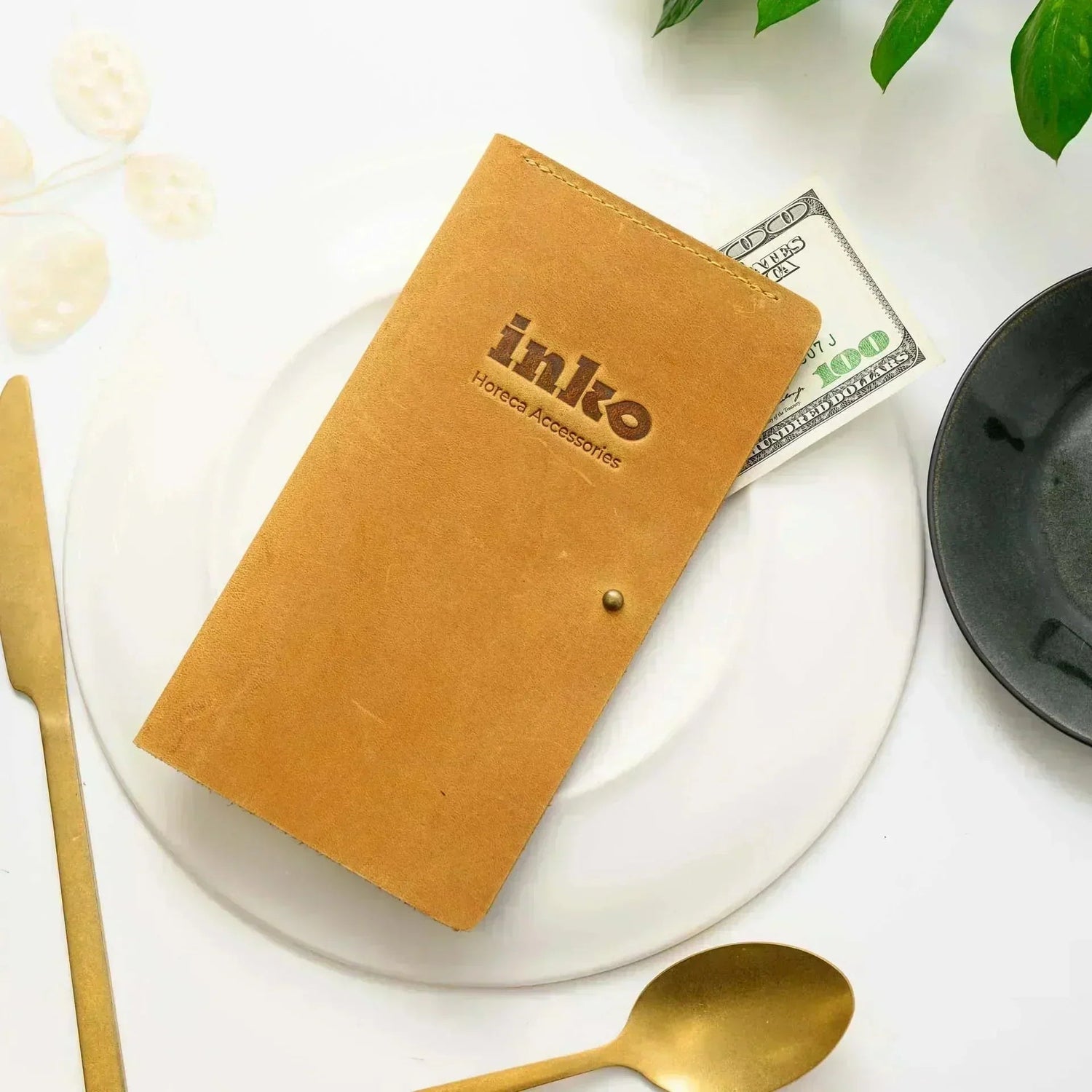
Leather is the default in premium hospitality for a reason. It has weight, it has texture, and it ages in a way that no synthetic material can replicate. A leather bill folder that's been in service for a year looks more distinguished than the day it arrived, provided it's genuine leather, not a laminated substitute.
For fine dining, steakhouses, and wine-focused restaurants, a leather check presenter with a debossed logo is one of the most cost-effective branding investments available. Every table, every service, every guest: your logo is present at the moment they're making their final impression of the evening.

Best for: fine dining, hotel restaurants, wine bars, upscale bistros
Customization: debossing, embossing, foil stamping, contrast stitching, color selection
Worth knowing: Leather check presenters are among the most photographed table accessories on social media, particularly when they carry distinctive branding. Guests photograph the bill folder before opening it. That's free brand exposure on every table, every night.
2. Wood Accented Bill Folders
Wood brings a warmth to the table that leather alone doesn't quite achieve. A wooden spine, wooden cover panels, or a hybrid wood-and-leather construction gives the check presenter a handcrafted quality: something that feels made, not manufactured.
This format is particularly effective in venues that have invested in a natural, organic interior aesthetic. Farm-to-table restaurants, craft breweries, specialty coffee shops, rustic bistros, anywhere the material language of the space includes real wood, exposed grain, or natural textures. A wooden bill folder in those settings doesn't just fit. It reinforces the whole concept.
Laser engraving on wood produces exceptionally precise, permanent branding. The logo becomes part of the material itself, not something applied on top.

Best for:
Customization: laser engraving, UV printing, oil or wax finishes, leather spine accents
3. Slim and Compact Designs for Fast Service
Not every venue needs a substantial folder. Cafés, casual dining rooms, and high-turnover bistros benefit from slim, lightweight bill holders that staff can carry in a pocket, present quickly, and collect without ceremony.
The key is that "slim" doesn't mean "cheap." A compact check presenter in quality leather or PU, with a clean logo and good construction, makes the right impression even in a fast-casual setting. What it communicates is efficiency and professionalism. Exactly what guests in those environments appreciate.
Slim designs are also practical: they sanitize faster, stack more easily, and are less likely to be damaged in a busy service environment.

Best for: cafés, casual dining, bistros, fast-casual, breakfast spots
Key advantage: speed of service, easy cleaning, lightweight for staff
4. Branded Finishing Touches That Do Real Work
The difference between a generic check presenter and a branded one isn't the quality of the material. It's the intentionality of the details. Logo placement, stitching color, interior pocket finish, the weight of the metal closure: none of these are expensive to get right, and all of them register with guests.
Specific finishes that consistently elevate check presenters:
- Debossed logo: pressed into the material surface, subtle and permanent. Reads as quality without being decorative.
- Contrast stitching: a single thread color change that draws the eye and signals craftsmanship.
- Custom interior color: the inside of the folder is visible every time it's opened. A branded interior color makes the moment of presenting the bill feel considered.
-
Foil stamping: for fine dining and hotels where gold or silver accents align with the interior aesthetic.

These aren't luxuries. They're the difference between a venue that thought about every detail and one that didn't.
5. Hygienic and Easy to Clean Options
Hygiene considerations haven't faded post-pandemic. They've been absorbed into baseline expectations. Check presenters are handled by multiple guests and staff every single service. The material choice affects how easily they can be wiped down between uses.
PU (polyurethane) and acrylic-blend covers perform well for quick sanitization: they're non-porous, moisture-resistant, and hold their appearance through repeated cleaning. For venues doing multiple sittings per service, this matters practically, not just theoretically.
The most effective approach is to align your check presenter with the rest of your tabletop presentation system, matching it in material and finish to your menu covers, QR stands, and table signs. When everything on the table speaks the same visual language, the effect is a coherent branded environment rather than a collection of individually chosen objects.
Explore our complete restaurant presentation sets: menu covers, check presenters, and table accessories designed to work together.
Choosing the Right Format: Quick Reference
| Venue Type | Best Format | Material | Branding Option |
|---|---|---|---|
| Fine Dining / Hotel | Full leather folder | Genuine leather | Debossing, foil stamping |
| Wine Bar / Bistro | Wood-leather hybrid | Oak + leather | Laser engraving |
| Farm-to-Table / Craft | Wooden bill holder | Natural wood | Laser engraving, UV print |
| Casual Dining / Café | Slim compact folder | PU or leather | Logo print or deboss |

The Last Impression Is Still an Impression
A check presenter doesn't need to be expensive to be right. It needs to be chosen. There's a meaningful difference between a venue that picked one deliberately (material, format, branding, alignment with the space) and one that ordered whatever was cheapest and moved on.
Guests feel that difference even when they can't articulate it. The bill arrives and it either reinforces everything the meal communicated or it quietly contradicts it. That last moment is yours to define.
From the InkoHoreca team: Whether you choose classic leather, a wood-accented hybrid, or a slim PU folder. The goal is the same: reflect your concept, align with your brand, and support smooth service. When the check is presented with care, the last impression becomes as memorable as the first.
What is a check presenter and why does it matter?
What material is best for a restaurant check presenter?
Should I put my restaurant logo on the check presenter?
How many check presenters does a restaurant need?
Should the check presenter match the menu covers?
How do I clean and maintain leather check presenters?


Leave a comment
This site is protected by reCAPTCHA and the Google Privacy Policy and Terms of Service apply.