




Menu Design 2026 · HoReCa Presentation · Restaurant Branding
Your menu cover is the first thing a guest holds. Before reading a single dish, they've already made a judgment about your restaurant. Getting that moment right is not complicated. It just requires choosing the right format for who you are.
Most restaurants treat the menu holder as a procurement decision. Order something that fits A4, pick whatever material is in budget and move on. The result is a menu that looks like it came from a catalog because it did.
The restaurants that get this right think about it differently. They match the format to the concept, the material to the interior and the binding to how often the menu actually changes. The result looks intentional. Guests notice it even when they don't consciously register it.
This guide covers seven menu formats matched to specific venue types and culinary styles. If you're opening a new concept or updating an existing one, it will help you choose the right solution rather than the default one.
1. Hardcover Leather Menu Holders for Fine Dining
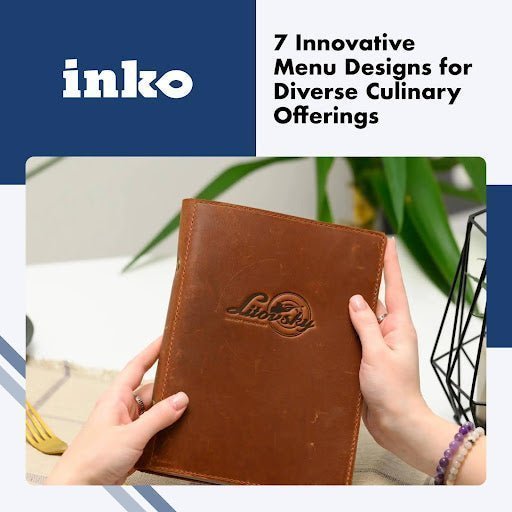
Fine dining menus carry a specific weight in the guest's hand before a word is read. A hardcover leather menu holder with brass hardware communicates that this is a place that has thought carefully about every detail. That impression is formed in the first two seconds and it shapes how the guest reads everything that follows.
Leather is the right choice here for practical reasons as well as aesthetic ones. It ages well under daily handling. It takes debossing cleanly so your logo becomes part of the material. The hardcover construction keeps pages flat and the brass ring binder allows seasonal updates without replacing the entire cover.

Best for: fine dining, wine-focused restaurants, tasting menus, hotel restaurants
Key advantage: Hardcover keeps pages pristine. Brass ring binder makes seasonal updates a two-minute job rather than a reprint order.
- Hardcover leather with premium weight and feel
- Brass ring binder for easy page replacement
- Available in A5 / US Half Letter
- Suitable for debossed logo customization
2. Wooden Menu Holders for Casual and Rustic Concepts
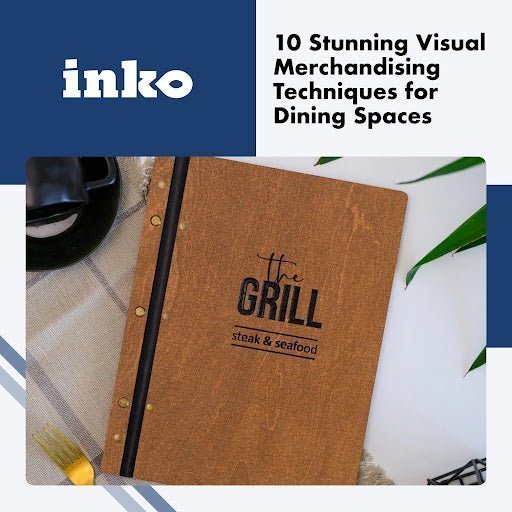
Wood reads differently than leather on a table. Where leather signals formality wooden menu holders signal craft. They feel made rather than manufactured. In the right setting, a well-constructed wooden menu holder with a leather strap or cord binding adds a layer of authenticity that nothing synthetic can replicate.
This format works well for farm-to-table restaurants, casual bistros, craft breweries and any venue where the interior includes natural materials. When the walls are reclaimed wood and the furniture is solid oak, a plastic-covered menu creates a jarring mismatch. A wooden holder makes the table setting feel cohesive.

Best for: farm-to-table, craft bars, brunch spots, rustic bistros, casual upscale
Key advantage: Laser engraving cuts your logo permanently into the wood grain. It never fades or peels.
- Natural wood construction with leather strap fastening
- Warm, artisanal aesthetic that photographs well
- Durable under daily restaurant use
- Available with laser-engraved logo customization
3. Hardcover Leather with Corner Fixings for Specialty Concepts
Specialty restaurants, boutique hotels and venues with a strong visual identity need a menu cover that can carry a brand rather than just hold pages. Corner-mount leather covers with screw-post or corner-fixing mechanisms deliver a clean, considered look that works for single-sheet tasting menus as well as multi-page à la carte formats.
The screw-post mechanism is practical for venues that reprint pages seasonally. The cover stays in service for years while the inserts are refreshed. The corner-fixing version suits prix fixe and tasting menus where a single printed sheet needs to sit flat and be read without interference.

Best for: boutique venues, tasting menus, supper clubs, cocktail bars, specialty concepts
Key advantage: The cover becomes a long-term brand asset. Pages change. The branded cover does not.
- Hardcover leather with corner fixings for secure page holding
- Screw-post binding option for seasonal inserts
- Clean, flat page presentation
- Debossing and logo customization available
4. Ring Binder Wooden Holders for Frequently Updated Menus
Restaurants with rotating specials, seasonal menus or regularly changing dishes face a specific operational problem. They need a menu that looks permanent but updates quickly. A fixed-format leather book reprinted every few weeks is expensive and wasteful. A ring binder mechanism inside a quality wooden cover solves both problems.
The wooden exterior maintains the warmth and character of a handcrafted object. The ring binder inside means a staff member can swap out pages in under a minute without tools. For breakfast-to-dinner operations where the menu changes between services this is not a convenience. It is a necessity.

Best for: cafés with daily specials, farm-to-table with seasonal menus, brunch restaurants, multi-service operations
Key advantage: Pages swap in seconds. The wooden cover never needs replacing.
- Natural wood construction with integrated ring binder
- Fits US Letter / A4 sheets
- Fast page updates without tools
- Durable for multiple services per day
5. Wine List and Cocktail Menu Holders
A wine list or cocktail menu is a separate branded object. It arrives at a different moment in the guest journey and signals a different kind of attention. Presenting your wine program in the same cover as the food menu misses an opportunity. A dedicated holder for the wine list or cocktail menu communicates that the beverage program is taken as seriously as the food.
Wooden boards with leather spine covers or a crazy horse leather exterior work particularly well for this format. They have enough visual weight to feel like a considered object rather than an accessory. They photograph well and they create the kind of tactile impression that guests associate with quality before tasting anything.

Best for: wine bars, cocktail bars, fine dining with an extensive beverage program, tasting menus
Key advantage: A dedicated wine list holder elevates the beverage presentation to match the food. Guests notice the distinction.
- Wooden board with crazy horse leather cover
- Embossing options for wine list or beverage branding
- Available in multiple sizes for different wine list lengths
- Pairs with matching food menu covers for a coherent table presentation
6. Menu Holders for Counter Service and Fast-Casual
Counter service and fast-casual venues have different requirements. The menu is often handled by staff rather than guests and it needs to withstand more frequent use across multiple services. A metal binder mechanism inside a wooden holder combines durability with a natural aesthetic that reads as considered rather than institutional.
This format works well when the concept is built around a genuine food story, whether that's a craft sandwich shop, an artisan pizza counter or a specialty coffee bar that takes its food program seriously. The material choices signal that this is not a generic operation even when the service model is fast.

Best for: counter service, fast-casual, artisan food concepts, specialty coffee with a food menu
Key advantage: Metal binder mechanism handles the wear of multiple services per day. Wooden construction keeps it looking considered rather than generic.
- Metal binder mechanism for durability under frequent use
- Natural wood construction for warmth and character
- Easy menu organization with clear section structure
- Suitable for regular content updates between services
7. Matching Your Menu Cover to Your Culinary Identity
The strongest menu presentations are not the most expensive ones. They are the most consistent ones. When the menu cover, check presenter and table accessories share the same material language the table setting reads as a designed system. That coherence is what guests register as quality even when they cannot name the specific reason.
A tasting menu restaurant presenting a leather hardcover menu and then delivering the bill in a paper receipt undermines the entire preceding impression. A casual bistro with reclaimed wood tables and a plastic-sleeved menu creates a mismatch that guests feel without articulating it. Consistency across every touchpoint is the simplest and most effective branding decision available.
If you want to go deeper on how layout, typography and menu copy work alongside the physical cover, our full guide covers every layer of the subject: Restaurant Menu Design: The Complete Guide.
From InkoHoreca: The most common mistake we see is a venue that has invested in a serious interior and then ordered the cheapest menu covers available. The menu is the first branded object a guest holds. It sets expectations that everything else either confirms or contradicts.
Branding Your Menu Cover: What the Finish Actually Does
Choosing the right format is the first decision. Choosing the right finish is the one that makes a menu cover yours rather than anyone else's. A branded cover does not need to be expensive to look considered. The right technique on the right material produces an object that reads as premium regardless of its actual cost.
This is worth saying directly: a well-finished custom cover consistently looks more expensive than a plain one at twice the price. Guests judge by what they see and feel, not by what is on the invoice.
Wood: Engraving and Toning
Laser engraving cuts your logo, name or illustration permanently into the wood grain. The result is precise, tactile and completely durable. It does not fade, peel or wear with daily use. The depth of the engraving can be adjusted to create a subtle tone-on-tone effect or a more pronounced mark depending on your brand's aesthetic.
Wood toning adds a second dimension. A stained or toned surface changes how the engraving reads: a lighter engraving on a dark-toned oak board creates a refined, almost graphic quality. A natural wood surface with a deep engraving reads as more rustic and craft-forward. Both are intentional choices rather than defaults.
Leather: Blind, Gold, Copper and Silver Foil
Leather branding offers the widest range of finish options and the widest range of impressions.
Blind embossing presses the logo into the leather without any added color or foil. The result is a subtle, dimensional mark that reads differently in different lighting. It is the most understated option and often the most elegant one for fine dining and boutique venues.
Gold foil stamping adds a metallic finish that catches light. It reads as premium immediately and works particularly well on dark leather. For hotel restaurants, wine bars and venues with a luxury positioning, gold foil on a deep brown or black cover is one of the most effective visual signals available.
Copper foil is the warmer option. It pairs naturally with brown leather tones and wood interiors. For venues going for a craft, artisanal or boutique feel, copper has a quality that gold does not: it looks like a considered choice rather than a default luxury signal.
Silver foil suits modern, minimal and Scandinavian-influenced interiors. Clean white or grey leather with a silver stamped logo reads as sharp and contemporary without the warmth of gold or copper.
| Finish | Material | Visual Effect | Best Suited For |
|---|---|---|---|
| Laser engraving | Wood | Permanent, tactile, tone-on-tone | Any concept using natural wood |
| Wood toning | Wood | Changes surface color and engraving contrast | Rustic, craft, dark-interior concepts |
| Blind embossing | Leather | Subtle, dimensional, no color | Fine dining, tasting menus, boutique venues |
| Gold foil stamping | Leather | Metallic, catches light, premium signal | Hotels, wine bars, luxury positioning |
| Copper foil stamping | Leather | Warm metallic, craft feel | Artisan bistros, craft bars, boutique concepts |
| Silver foil stamping | Leather | Cool metallic, sharp and contemporary | Modern, minimal, Scandinavian-influenced venues |
The practical reality: Custom branding on a menu cover is one of the most cost-effective investments in restaurant presentation. The cover is handled by every guest at every table every service. The cost per branded impression is lower than almost any other marketing spend. A well-finished cover looks like it cost significantly more than it did. That gap between perceived value and actual cost is exactly where smart operators work.
Choosing the Right Format: Quick Reference
| Venue Type | Best Format | Material | Update Frequency |
|---|---|---|---|
| Fine dining / Hotel | Hardcover leather with brass binder | Genuine leather | Seasonal |
| Farm-to-table / Rustic | Wooden holder with leather strap | Natural wood | Seasonal |
| Tasting menu / Boutique | Hardcover leather with corner fixings | Leather with screw post | Seasonal or less |
| Daily specials / Seasonal | Wooden holder with ring binder | Wood with ring mechanism | Weekly / Daily |
| Wine bar / Cocktail bar | Wooden board with leather cover | Wood and crazy horse leather | Seasonal |
| Fast-casual / Counter service | Wooden holder with metal binder | Wood with metal mechanism | Daily / Per service |
Now that you know which format fits your venue, browse our full menu cover range — leather, wood and hybrid formats across every size and binding type:
Browse All Menu CoversPrefer everything matched and ready to go? We have pre-built sets that pair menu covers, check presenters and table accessories in the same material and finish:
View Ready-Made Restaurant SetsHow do I choose the right menu cover for my restaurant concept?
What is the best menu holder for a restaurant with a changing menu?
Should a wine list have its own separate menu holder?
Can I add my restaurant logo to a menu cover?
How many menu covers does a restaurant need to order?
Do menu covers need to match the check presenters and other table accessories?

Leave a comment
This site is protected by reCAPTCHA and the Google Privacy Policy and Terms of Service apply.