




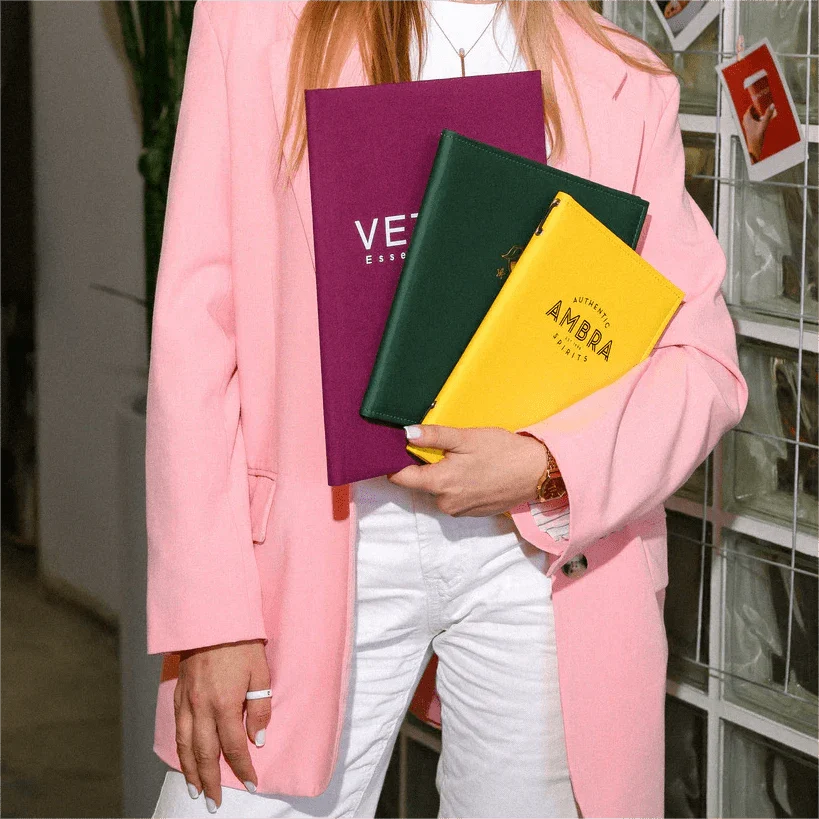
Menu Covers · HoReCa Accessories · Restaurant Presentation
The right menu cover is not the most expensive one. It is the one that matches your venue, your update schedule and the hands that will hold it every service.
Most restaurant owners choose menu covers the same way they choose disposable napkins: find something that fits the size, pick the cheapest option in budget and move on. The result is a cover that does its job technically but contributes nothing to the experience.
The decision is actually straightforward once you know what to look for. Material, binding type and size each answer a specific question about your operation. Get those three right and the cover takes care of itself for years.
This guide focuses on the practical side of the choice: which material suits which venue, which binding matches your update frequency and what to check before placing an order.
Want the bigger picture first? Our complete guide covers menu layout, typography, pricing psychology and menu engineering in full: Restaurant Menu Design: The Complete Guide for 2026 →
Step 1: Match the Material to Your Venue
The material of your menu cover is the first signal guests receive about your restaurant. It communicates concept, price point and attention to detail before a single dish is read. The wrong material creates a mismatch that guests register even when they cannot name it.
Leather: Fine Dining, Hotels and Wine-Focused Restaurants
Genuine leather is the right choice when the guest experience is built around formality, craft and considered service. It has weight in the hand, ages well under daily use and takes debossing cleanly so your logo becomes part of the material rather than something applied on top.
Leather works across a wide range of formats: binders for multi-page à la carte menus, screw-post covers for seasonal tasting menus and corner-mounted formats for single-sheet prix fixe presentations. The material is consistent enough to carry any of these formats without looking out of place.

Best for: fine dining, hotel restaurants, wine bars, steakhouses, tasting menus
Avoid if: your interior is built around natural wood and raw materials - leather can feel out of place in that context
Wood: Casual, Craft and Farm-to-Table Concepts
Wooden menu covers signal craft and authenticity. In a space with reclaimed timber, exposed brick or a farm-to-table concept, a wooden cover feels like part of the room. A leather cover in the same setting creates a subtle mismatch that guests notice without being able to explain.
Wood also offers the most durable branding option available: laser engraving cuts your logo permanently into the grain. It does not fade, peel or wear with daily handling. For venues that want a branded cover without ongoing maintenance, this is the most practical choice.

Best for: farm-to-table, craft breweries, brunch spots, casual bistros, artisan food concepts
Avoid if: your venue is formal or your interior uses predominantly dark, polished surfaces
Fabric: Boutique Cafés and Modern Concepts
Fabric covers have a softness and organic quality that neither leather nor wood can replicate. Linen and canvas work particularly well in boutique cafés, tea rooms and modern bistros where the aesthetic is warm but not rustic. They are lighter than leather and wood and pair naturally with brass hardware and natural thread stitching.
Best for: boutique cafés, tea rooms, modern bistros, brunch concepts with a soft aesthetic
Avoid if: your operation involves heavy daily handling across multiple services - fabric shows wear faster than leather or wood
Faux Leather: Mid-Range Restaurants and High-Volume Venues
Faux leather delivers a polished, professional look at a lower price point than genuine leather. It is more resistant to moisture and easier to wipe clean, which makes it a practical choice for venues with high table turnover or outdoor seating. The surface takes printed branding well and holds its appearance under daily use without the maintenance that genuine leather requires.
Best for: mid-range restaurants, hotel breakfast rooms, high-volume casual dining, venues with outdoor or terrace seating
Avoid if: your positioning is built around premium materials and tactile quality - guests who handle genuine leather regularly will notice the difference
Step 2: Choose the Binding for Your Update Frequency
The binding is the operational decision. It determines how quickly you can update pages, how the menu feels in the guest's hand and how long the cover stays in service before needing replacement. Getting this wrong costs money: a fixed-format cover reprinted every few weeks is expensive and wasteful.
| Binding Type | How It Works | Best Update Frequency | Best Suited For |
|---|---|---|---|
| Metal Binder | Metal rings hold pages and allow fast swapping | Daily or weekly | Cafés with daily specials, multi-service operations |
| Screws and a Plank | Unscrew, swap pages, then rescrew to secure | Seasonal (every 3-4 months) | Fine dining, tasting menus, hotel restaurants |
| Corner Mountings | Fix a single sheet at the corners so it lies flat | Rarely - stable menus only | Prix fixe, tasting menus, single-sheet formats |
| Elastic Band | Wraps around or secures the cover to hold pages in place | Seasonal or stable | Rustic and craft concepts, wooden covers |
The practical rule: If your menu changes more than once a season, choose Metal Binder or Screws and a Plank. If it stays stable for months at a time, Corner Mountings or a Leather Strap give a cleaner look. The cover should outlast the pages by years and the binding is what makes that possible.

Step 3: Get the Size Right
Menu cover size affects how the menu reads at the table and how comfortable it is to hold. A cover that is too large dominates the table and creates awkward handling. One that is too small forces small type and cramped layouts that are hard to read in restaurant lighting.
| Format | Dimensions | Best For |
|---|---|---|
| Letter | 8.5" × 11" / 216 × 279 mm | Full à la carte menus, casual dining, cafés with multi-item menus |
| Legal | 8.5" × 14" / 216 × 356 mm | Extensive menus, beer and cocktail lists with many items |
| 2/3 US Letter / 2/3 A4 | 6.7" × 11" / 170 × 280 mm | Wine lists, cocktail menus, bar menus - narrower format feels considered at the table |
| A4 | 8.27" × 11.69" / 210 × 297 mm | Standard restaurant menus across most European and international venues |
| Half Letter / A5 | 5.5" × 8.5" / 148 × 210 mm | Tasting menus, prix fixe, dessert menus, small-table formats |

A4 and Letter are the most common choices for full restaurant menus. The 2/3 US Letter / 2/3 A4 format is particularly well suited to wine and cocktail lists where the narrower shape feels more deliberate at the table. Half Letter and A5 work best for short menus where the content fits comfortably on fewer pages and the smaller format adds a sense of occasion.
Step 4: Add Branding Before You Order
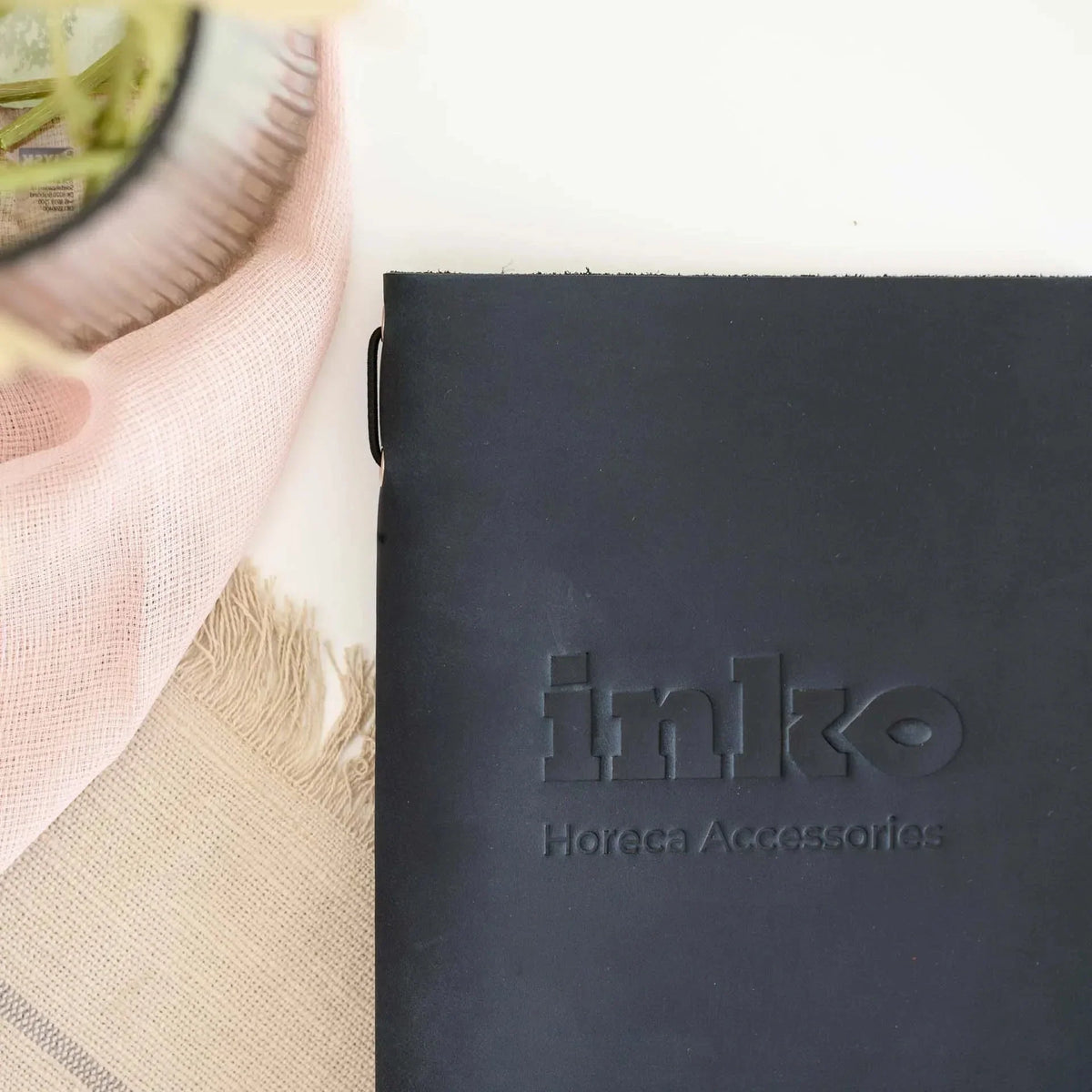
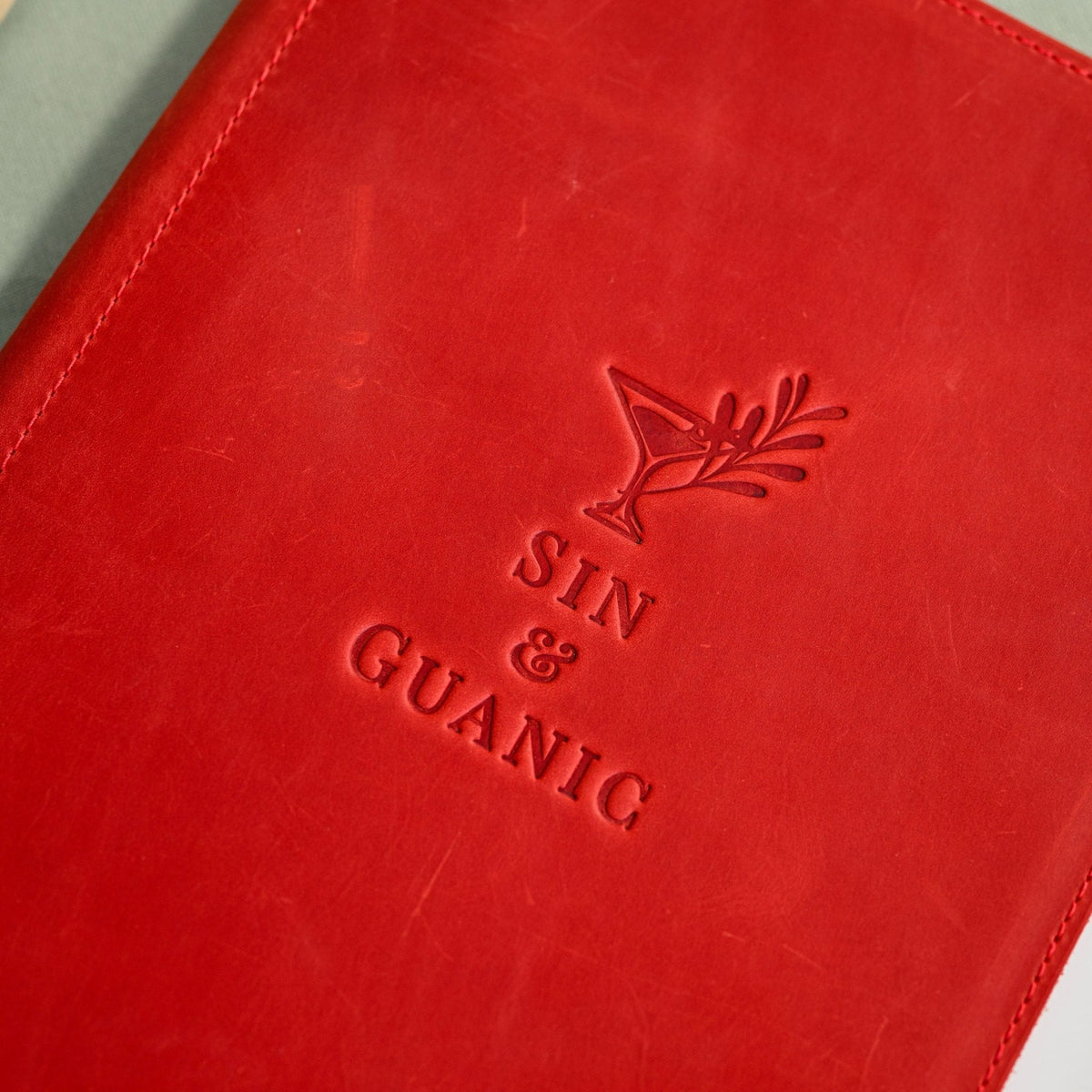
A plain cover is a missed opportunity. The menu is the first branded object a guest holds at your restaurant. A logo debossed into leather or laser-engraved into wood costs a fraction of the cover itself and produces a result that reads as significantly more premium than the actual investment.
The right branding technique depends on the material:
- Leather: Blind debossing for a subtle, dimensional mark. Gold, copper or silver foil stamping for venues with a luxury or boutique positioning.
- Wood: Laser engraving for a permanent, tactile mark that becomes part of the grain.
- Fabric: UV printing directly onto the surface for sharp, full-color logo reproduction without adding texture or bulk.
- Faux leather: Foil stamping or debossing depending on the surface finish and the level of detail in the logo.
From InkoHoreca: The most common mistake we see is a venue that has invested in a serious interior and then ordered unbranded covers to save on cost. The cover is handled by every guest at every table every service. The cost per branded impression is lower than almost any other marketing spend in the building.
Step 5: Order the Right Quantity
Under-ordering is the most common operational mistake with menu covers. Running out of clean covers between services forces staff to hand guests worn or damp menus which undermines everything the cover was meant to communicate.
The standard calculation: one cover per table plus 20 to 25 percent additional stock for rotation. For a 30-table restaurant that means 36 to 38 covers. This accounts for covers in use, covers being cleaned and covers held in reserve for wear replacement.
For wine list holders the ratio is different. One per two tables is typically sufficient since wine lists circulate differently to food menus and are not placed on every table simultaneously.
If you run multiple sittings per service, having enough covers so that none are rushed through cleaning between sittings matters for both hygiene and presentation. A cover that smells of the previous table is worse than no cover at all.
Quick Reference: Material and Binding by Venue Type
| Venue Type | Material | Binding | Recommended Size |
|---|---|---|---|
| Fine dining / Hotel | Genuine leather | Screws and a Plank or Metal Binder | A4 or Half Letter / A5 |
| Farm-to-table / Rustic | Natural wood | Leather Strap or Metal Binder | A4 or Letter |
| Tasting menu / Prix fixe | Genuine leather | Corner Mountings or Screws and a Plank | Half Letter / A5 |
| Café / Daily specials | Wood or faux leather | Metal Binder | A4 or Letter |
| Wine bar / Cocktail bar | Leather or wood | Screws and a Plank or Leather Strap | A6 or 2/3 US Letter / 2/3 A4 |
| Boutique café / Modern bistro | Fabric | Metal Binder or Screws and a Plank | A4 or 2/3 US Letter / 2/3 A4 |
| Fast-casual / High-volume | Faux leather or wood | Metal Binder | Letter or Legal |
Browse our full range of leather, wooden and fabric menu covers and textile menu folders across every size and binding type:
Browse All Menu CoversWant everything matched and ready to go? Our pre-built sets pair menu covers, check presenters and table accessories in the same material and finish:
View Ready-Made Restaurant SetsWhat is the difference between leather and wooden menu covers?
Which binding type is best for a menu that changes frequently?
What size menu cover should I order?
Can I add my logo to a menu cover?
How durable are wooden menu covers under daily restaurant use?
Should menu covers match the check presenters and other table accessories?

Leave a comment
This site is protected by reCAPTCHA and the Google Privacy Policy and Terms of Service apply.