

Short answer: pick a menu board you can update as fast as your menu changes, make the letters big enough to read from where guests stand in line, and keep it to a few clear sections. Below are ten menu board ideas for cafés, bakeries, bars and restaurants, with the design rules that make any board readable.
10 menu board ideas
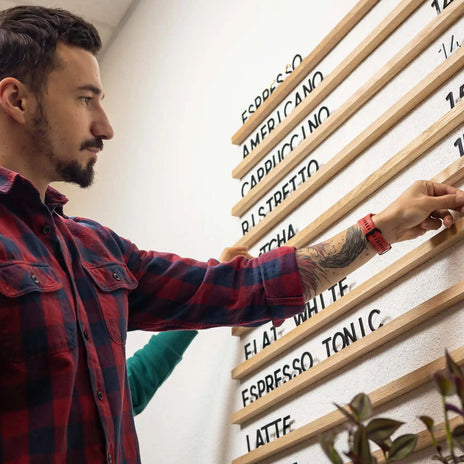
1. Changeable letter board on oak rails
Horizontal oak rails hold letters you slide in by hand, so a price or a dish changes in a minute with no printing. The wood makes it part of the interior instead of a sign stuck on the wall. Our boards come with 5 or 10 rails about 1 m (39 in) long and a full set of 1.6-inch letters, from $159 per set, and ship from our US warehouse in 1–2 business days.

Works for: coffee shops, bakeries, brunch places. See the wall menu board with natural oak rails.
2. Black rails for a dark or industrial interior
The same system with black rails reads as modern and graphic. Pair black rails with white letters on a dark wall, or with black letters on a light wall for the strongest contrast.

Works for: specialty coffee, cocktail bars, burger places. See the wall menu board with black oak rails.
3. White rails for a bright, Scandinavian look
White-painted rails almost disappear on a light wall, so the menu itself stands out. Brown or black letters keep it readable.
Works for: bakeries, ice cream shops, minimal cafés. See the wall menu board with white-painted oak rails.

4. A main board plus a specials board
Split the wall: a large board for the permanent menu and a smaller one beside it for today's specials or seasonal drinks. Staff update only the small board, and guests see at a glance what is new. A 5-rail board works well as the specials board next to a 10-rail main menu.

5. Chalkboard for daily specials
Hand lettering feels personal and costs little. It works best for a short list that changes every day; for a full menu, chalk smudges and depends on whoever has the neatest handwriting.

6. Printed panel or lightbox
A printed menu in a frame or a backlit panel gives you photos and exact brand fonts. The trade-off: every price change means reprinting, so it suits menus that stay the same for months.

7. Digital screens
Screens make sense for chains that change prices centrally or run time-of-day menus. For a single café, they cost more and can look out of place in a warm interior.

8. Felt or peg letter board
Small felt boards with push-in letters suit a counter, a pop-up or a short list of add-ons. On a big wall they become hard to read from a distance.
9. A-frame board outside the door
A sidewalk board with today's special or a coffee price brings in people walking past. Keep it to three or four lines that can be read while walking.
10. Hand-painted wall menu
Painting the menu directly on the wall makes a strong statement, but every change needs the painter again. Use it for the name and categories, and add a changeable board for items and prices.
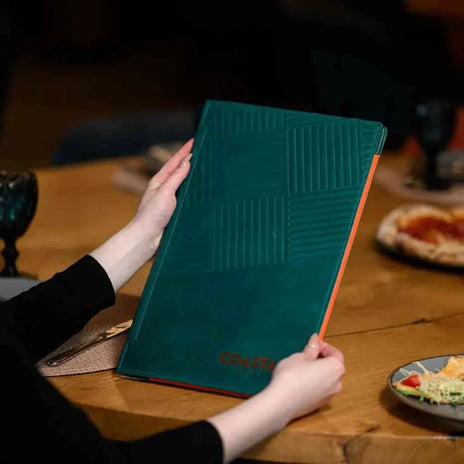
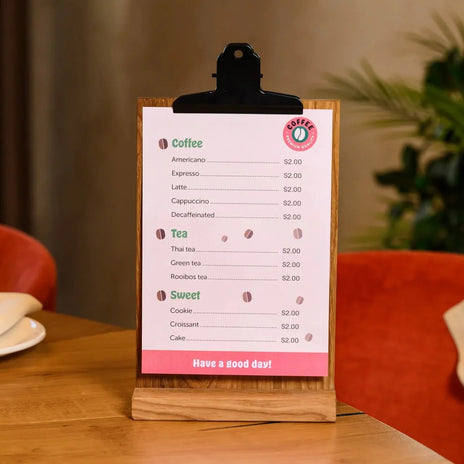
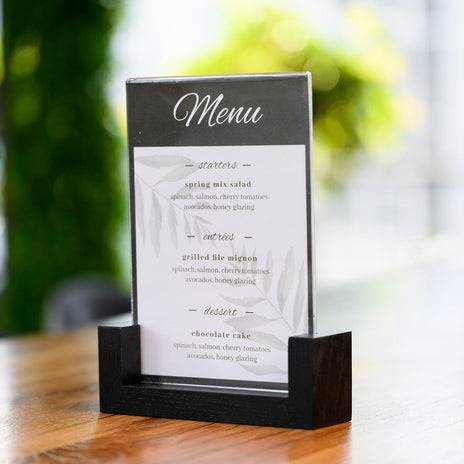
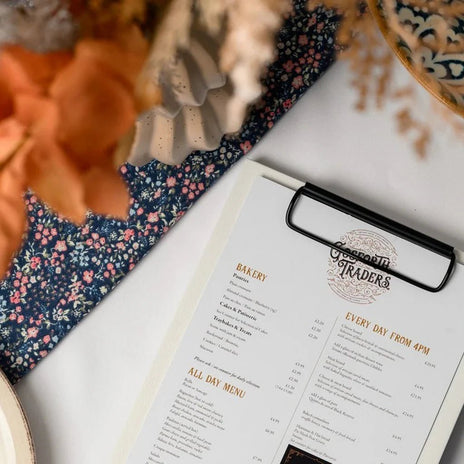
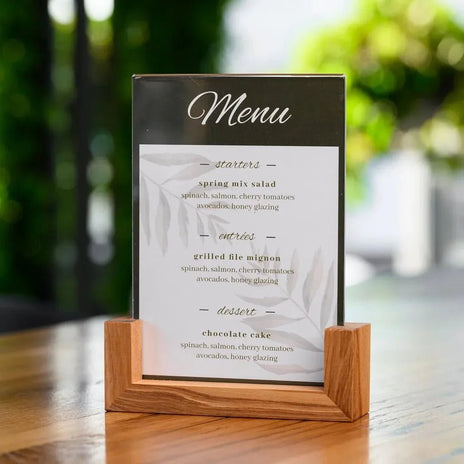
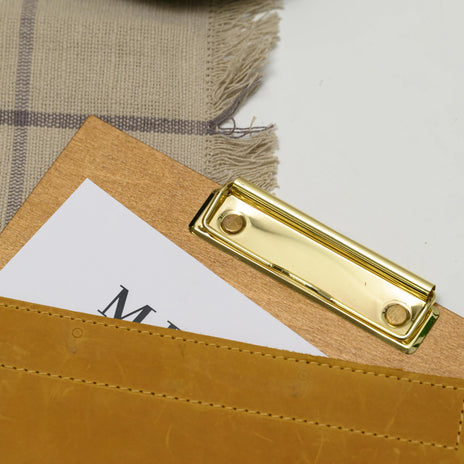
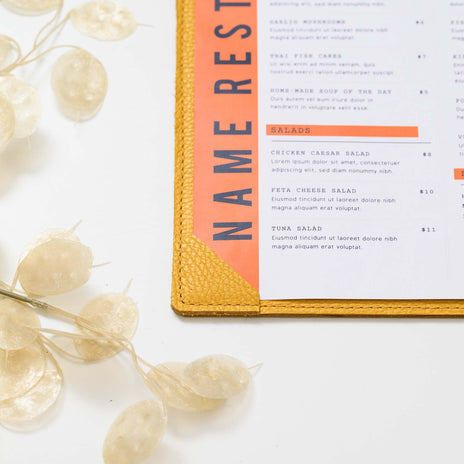
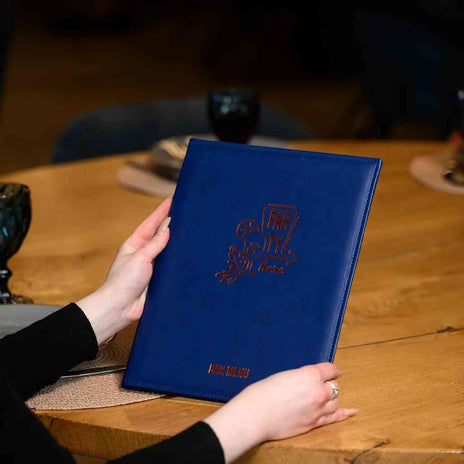
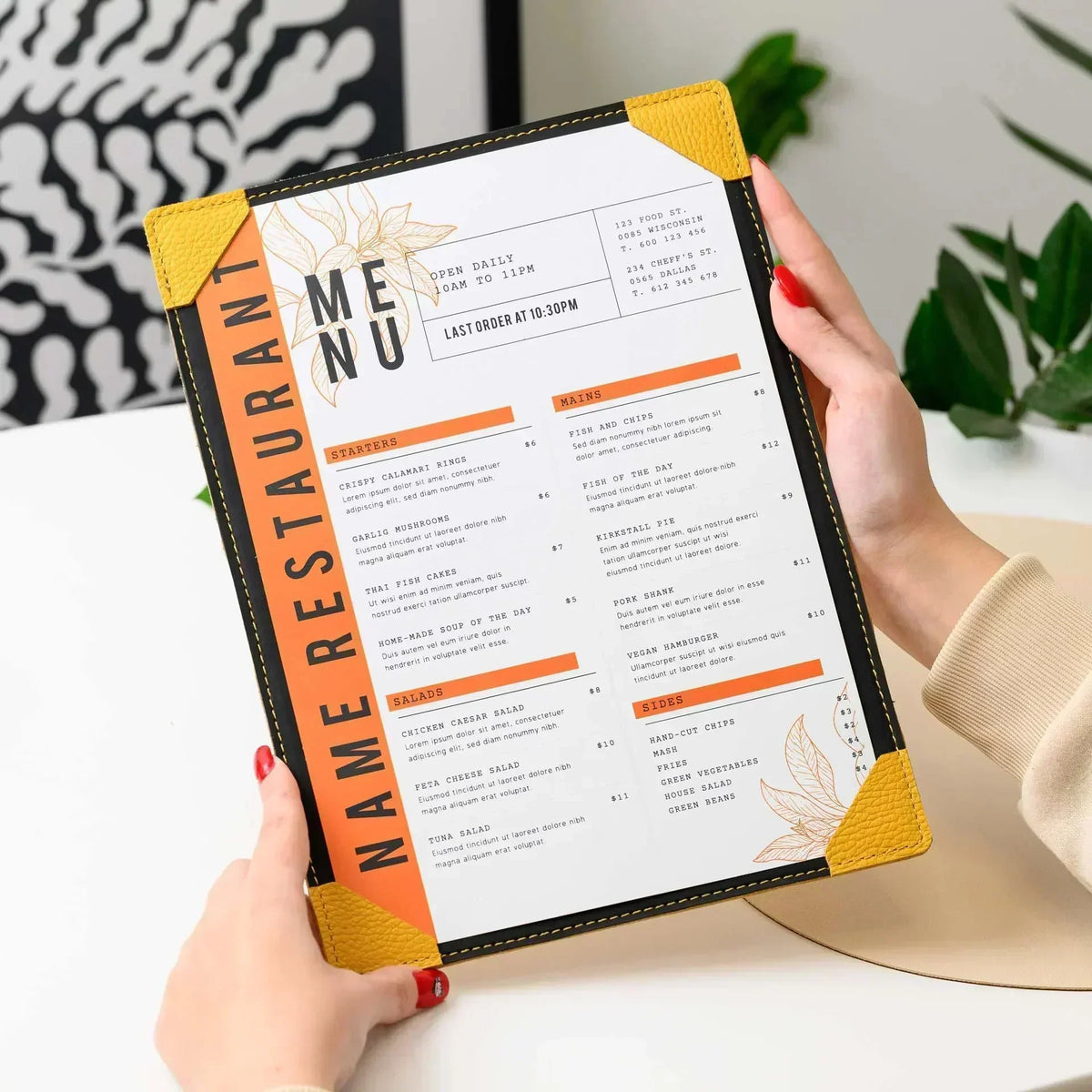
Need a menu for the table rather than the wall? See our menu holder ideas for table stands and handheld menu boards.
Menu board design tips
Size the letters for the distance
A common signage rule is 1 inch of letter height for every 10 feet of viewing distance. Measure from the farthest point where guests decide what to order, usually the end of the line.
| Viewing distance | Minimum letter height |
|---|---|
| Up to 10 ft (3 m) | 1 in (2.5 cm) |
| Up to 16 ft (5 m) | 1.6 in (4 cm), the size of our rail board letters |
| Up to 20 ft (6 m) | 2 in (5 cm) |
| Up to 30 ft (9 m) | 3 in (7.5 cm) |
Keep the layout simple
- Group items into a few sections: for example coffee, tea, food, extras.
- Keep each section short. Long lists slow the line down.
- Line prices up in one column so guests can compare them.
- Leave an empty rail or line between sections; white space makes the board easier to scan.
- Put the items you most want to sell at the top of a section or in a section of their own.
Place it where guests look
- Behind or above the counter, visible from the line and not hidden by the coffee machine.
- Bottom of the board no lower than the counter top, top within easy reading height.
- Lit evenly: a board in a dark corner or with glare from a window is hard to read.
Match the board to the interior
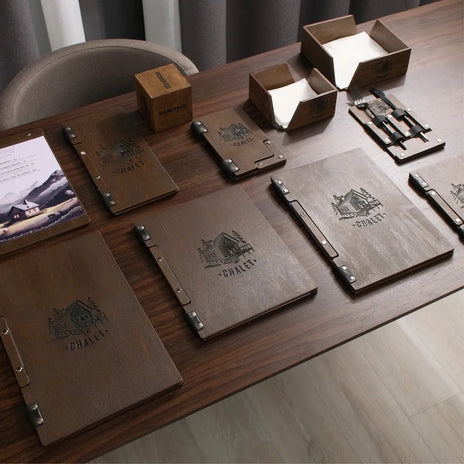
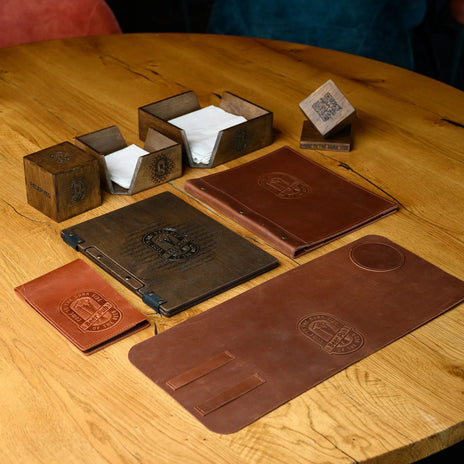
Choose the rail color with the walls and furniture: natural oak for warm wood interiors, black for dark or industrial rooms, white for bright minimal spaces. Then choose letters in the color with the most contrast against the wall. If your menu covers and table stands are wood too, keep the same tone across all of them.
Which menu board fits your venue
| Venue | Menu changes | Idea to start with |
|---|---|---|
| Coffee shop, bakery | Prices and seasonal drinks | Changeable letter board on oak rails (1), plus a specials board (4) |
| Bar, burger place | Occasionally | Black rails (2) or a printed panel (6) |
| Bright minimal café, ice cream shop | Seasonally | White rails (3) |
| Restaurant with daily specials | Every day | Chalkboard (5) next to printed table menus |
| Chain with central pricing | Often, by head office | Digital screens (7) |
For a step-by-step guide to choosing and mounting a rail board, read how to pick a hanging menu board with oak rails, or browse all wall menu boards.
FAQ
What should be on a café menu board?
Your main drinks and food with prices, grouped into a few sections, plus space for specials or seasonal items. Add-ons such as milk alternatives and extra shots can go in a short line at the bottom.
How big should the letters on a menu board be?
About 1 inch of letter height for every 10 feet of viewing distance. Letters 1.6 inches tall read comfortably from about 16 feet.
Where should a menu board go?
Behind or above the counter, where guests in line can read it before they reach the register, with even light and no glare.
What is the easiest menu board to update?
A changeable letter board: you slide letters in and out of the rails by hand, with no printing. A chalkboard is just as fast for a short list of specials.
How much does a wall menu board cost?
Our rail menu boards start at $159 for a set with rails and a full letter set, and ship from our US warehouse in 1–2 business days.
Put your menu on the wall
Choose the rail color and letters for your interior and update prices in minutes. Browse our wall menu boards or contact our team if you need help with the size of the board.