




Menu Covers · Wine List Guide · InkoHoreca
Wine Menu Covers: What Sommeliers Actually Look For
A wine list does more work than any other page in the house. It sets the price ceiling, signals how serious the room is about pairing, and gets handled with two hands instead of one. The cover around it carries part of that message before a single bottle is poured.
The food menu and the wine list are not the same thing, and your guests approach them differently. They glance over the food menu in a minute. But they study the wine list. People take their time, compare regions, look for a specific vintage, and quietly decide how much they’re willing to spend tonight. This slower, more deliberate pace is the main reason why a wine list usually deserves a more substantial, carefully designed cover than an everyday menu, but it’s best if both menus are designed in the same style.
The second reason is commercial. Wine is a premium pour, often the highest-margin line on the bill, so its presentation is part of the sale. When a guest lifts a wine list that feels substantial, the format itself is doing some quiet persuading before they read a single label. The cover frames the selection the way a good frame flatters a painting. It signals, without a word, that what's inside was chosen with care.

What sommeliers actually look for
Spend time around people who run wine programs and the same priorities keep surfacing. They rarely talk about decoration. They talk about how the cover behaves in service: how it feels, how much it holds, and how fast the list can change. Three things matter most.
Weight as a quality signal
Pick up two covers and you'll feel the difference in about a second. A thin, floppy cover reads as an afterthought. A cover with real heft, whether that's a solid wood board, a thick hide, or a dense faux-leather build over rigid board, reads as confidence. Guests register this before they register the design, and a list that feels serious gently primes the table to trade up on the bottle.
Weight isn't only about impressions, though. A heavier cover lies flat on the table, keeps its shape after hundreds of openings, and shields the pages from spills and warping. Lighter covers tend to curl at the corners within a month or two of real use.
Page count and capacity
Wine lists run long. A food menu might be two pages, but a serious wine list can be ten, twenty, or more if the cellar is deep. So holding capacity matters here in a way it doesn't for most menus. The fastening has to carry the page count without the cover gaping open or the spine bulging out of shape.
This is where the binding method earns its place. For longer lists, a metal binder or a screws-and-plank system handles plenty of sheets cleanly and keeps every page square. Corner mountings suit shorter, by-the-glass lists where you want the inserts flush and quick to swap. By default, our folders are built for loose printed sheets. If you'd prefer a folder fitted with clear sheet protectors (file pockets) instead, just let us know before ordering through our contact page.
Rebinding and updates
The wine list changes more often than anything else in the building. A vintage sells out. A price shifts. A new grower comes on. If updating it means reprinting and rebuilding the whole cover every time, the program slows down, and stale lists become a genuine problem. Few things dent guest trust faster than ordering a bottle the floor stopped carrying weeks ago.
Covers built for rebinding fix this. With a screws-and-plank or metal-binder system, a member of staff loosens the fastening, swaps the affected sheets, and closes it back up in under a minute. No glue, no specialist, no covers out of rotation. For a list that turns over weekly, that one feature pays for itself many times across a season.
Quick tip: if your list changes weekly, ask for a screws-and-plank or metal-binder build from the start. It's the difference between a one-minute swap and a full reprint.
Materials that suit a wine list
We build wine covers in four materials, and each one sets a slightly different tone for the room.
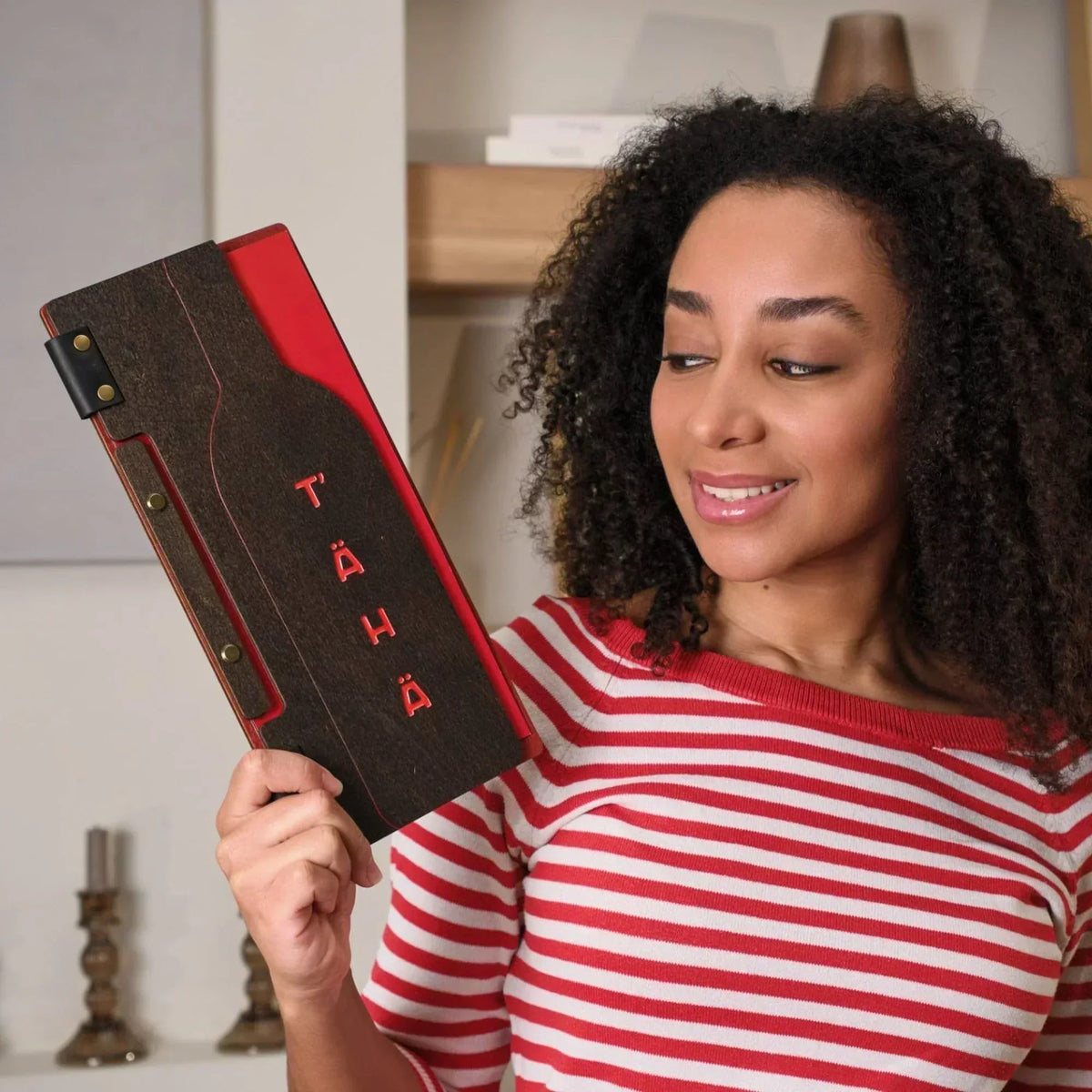
Wood is warm, tactile, and unmistakably premium. Wooden covers carry weight both literally and visually, which is why they suit cellars, steakhouses, and rooms that lean rustic or heritage. A screws-and-plank build lets them hold a long list comfortably.
Genuine leather is the classic fine-dining choice. It ages into the room, softens with handling, and carries the old-world quality most guests instinctively link to a serious wine program. It also takes debossing and foil beautifully.
Faux (PU) leather is the practical premium option. A good matte faux leather looks close to the real thing, wipes clean, shrugs off the scuffs of a busy floor, and costs less. For high-volume restaurants that want a refined look without fussing over the covers, it's often the smartest pick.
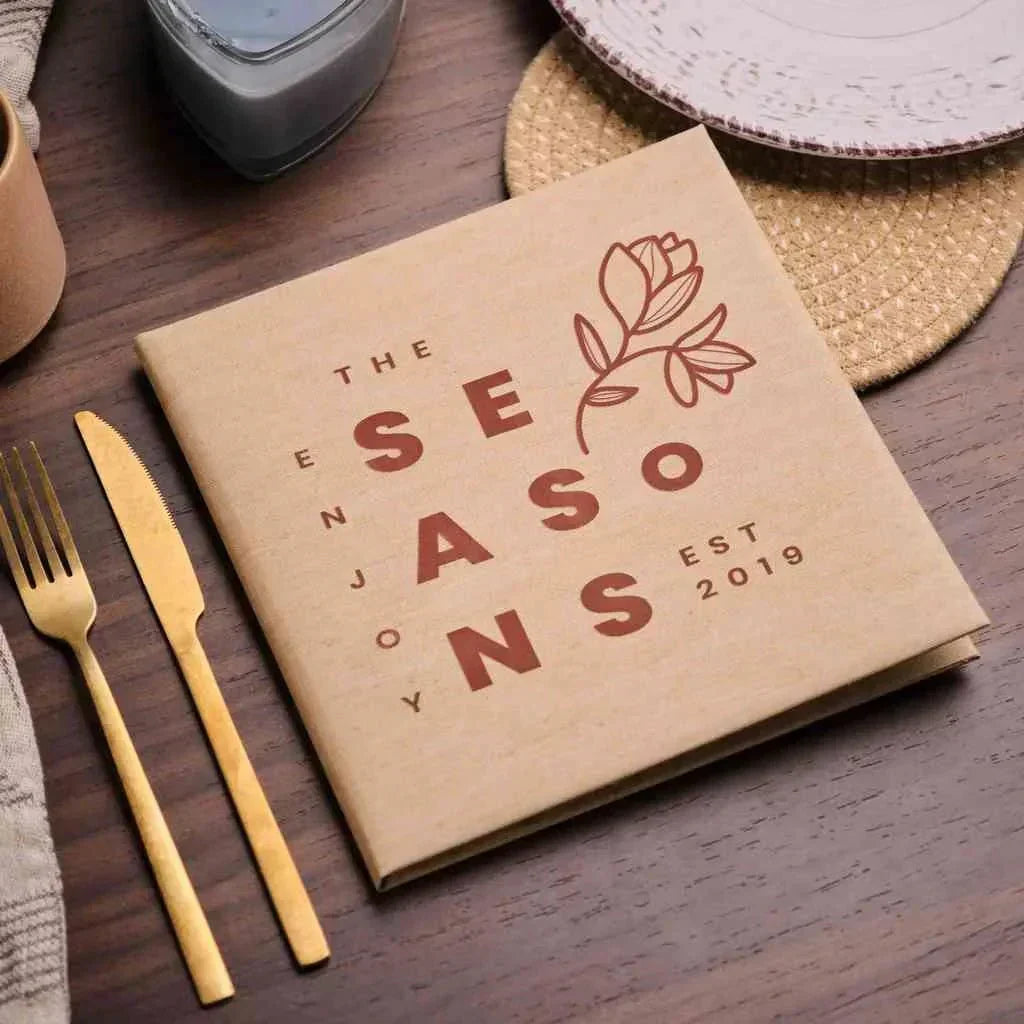
Textile is quieter and more contemporary. Fabric covers suit boutique dining rooms and wine bars going for warmth rather than formality. They photograph well and sit naturally alongside minimal, earthy interiors.
| Wood | Genuine leather | Faux (PU) leather | Textile | |
|---|---|---|---|---|
| Look & feel | Warm, natural, premium | Classic, old-world | Modern, close to leather | Soft, contemporary |
| Weight | Heavy | Medium to heavy | Medium | Light to medium |
| Durability | Very high | High, ages well | High, wipes clean | Moderate |
| Branding method | Engraving or print | Debossing or foil | DTF print or debossing | DTF print |
| Best for | Cellars, steakhouses | Fine dining | High-volume restaurants | Wine bars, boutique rooms |
Branding the cover
The wine list is also a branding surface, and the right method depends on the material. Genuine leather takes debossing or foil stamping in gold, copper, silver, or black, giving you a logo that catches the light without shouting. Faux leather and fabric are usually branded with DTF print, which reproduces full color and fine detail cleanly. Debossing can also be pressed into faux leather for a tonal, understated mark. The Mission Ceviche set below uses gold foil stamping on natural leather, applied with a die for a crisp, raised finish.

A quick note on how we work. InkoHoreca prints the artwork you supply, so we don't run a design studio. Bring your logo and your color references, and we'll match them to the technique that suits your chosen material.
Case study: Mission Ceviche, New York
A good example of all of this is a set we made for Mission Ceviche, a contemporary Peruvian restaurant in the heart of New York City.
One client really stuck with us: Brice, from Mission Ceviche. He placed a big, memorable order, 130 covers in total, 50 for the cocktail list and 80 standard ones. He wanted something that matched a bright, coastal-meets-urban room, not the dark leather most people picture for a menu.
So we chose natural Capri leather. It carried exactly the vibrant character Brice was after, and it held its own against a busy table. The logo went on in gold, stamped with a die for a crisp, raised finish that catches the light without overpowering the cover. The wine folder is held with an elastic band fastening, which keeps it closed neatly and makes swapping the list quick.

The covers fit the room and made menu updates painless, and they added a bit of tactile charm guests pick up on without quite knowing why. A wine list built the same way, in heavy natural leather with a clean gold mark, lands that impression the moment it's lifted. Here's what the team had to say.
"We absolutely love our custom-made menu folders from Inko Horeca. The quality is outstanding, and the design with the elastic band and corner mountings is both stylish and practical. They perfectly match our brand aesthetic and make menu changes super easy. The attention to detail and craftsmanship really stand out. Our guests notice the difference!"

Mission Ceviche · New York City
You can see more of this project in our Mission Ceviche portfolio project.
⚠️ Keep leather and faux leather away from standing moisture, wipe spills quickly with a dry cloth, and store covers flat rather than stacked on their edges. For genuine leather, an occasional conditioner stops it drying out. For the full routine by material, see our guide on keeping menu covers clean.
Choosing the right wine menu cover
Start with how the list behaves in your room. If it changes weekly, prioritize a rebinding-friendly build. If it runs long, plan for capacity. Then match the material to your interior and the impression you want at the table. A cellar wants weight and warmth. A busy bistro wants something that wipes clean and still looks the part. Get those two decisions right and the rest follows.
📌 Related Reads


Leave a comment
This site is protected by reCAPTCHA and the Google Privacy Policy and Terms of Service apply.