



Menu Covers · Restaurant Presentation · HoReCa Essentials
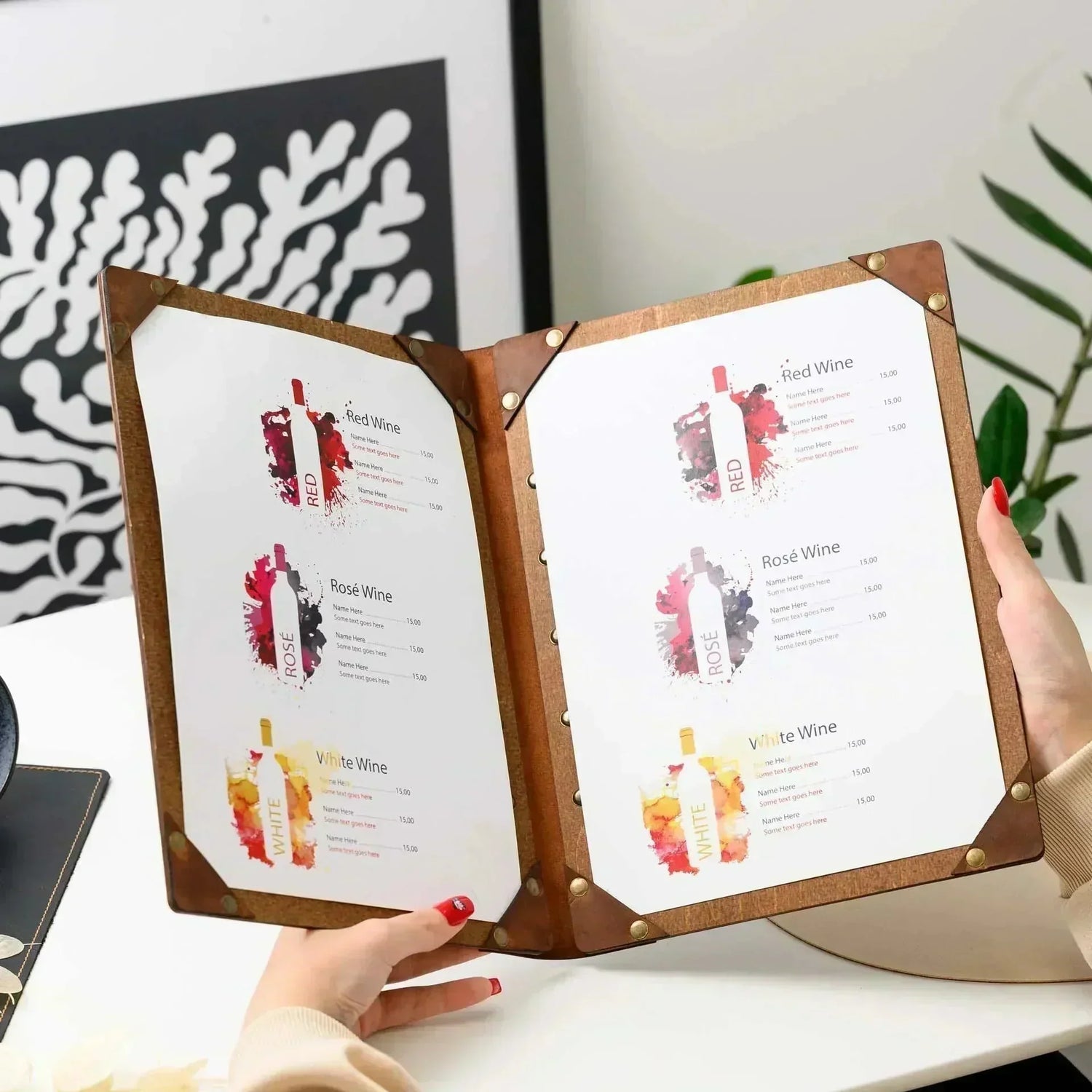
The word "cover" in hospitality carries two meanings. In service counting, a cover is one seated guest — when a restaurant says it served 80 covers on a Friday evening, it means 80 people. But in the context of table presentation, a restaurant cover is the menu holder itself: the leather folder, the wooden board, the fabric sleeve that wraps the printed menu and places it in the guest's hands.
This guide explains what a menu cover is, why it matters commercially and operationally, how different materials and fixing mechanisms work and — most importantly — how to choose the right cover for your specific type of establishment.
What Is a Cover in a Restaurant?
A menu cover is a durable outer casing that holds and protects the printed or inserted menu pages. It is handed to guests at the table, placed at the bar or displayed at the entrance. In professional use, it serves three simultaneous functions:

- Physical protection — it shields menu inserts from spills, grease, fingerprints and daily handling across multiple services.
- Brand presentation — it is the first branded object a guest interacts with and sets the visual tone for the entire dining experience.
- Operational tool — it allows staff to update inserts, add specials and manage seasonal changes without reprinting the full menu.
Menu covers are made from a range of materials — genuine leather, wood, faux leather, fabric — and come in formats suited to different service styles: hardcover folders for fine dining, slim boards for wine lists, compact holders for café counters.
Why a Menu Cover Is Not Just a Protective Sleeve
The First Impression Effect
Guests form their initial impression of a restaurant within the first few minutes of being seated. The menu is one of the first physical touchpoints in that window. A worn, flimsy or generic cover signals that the establishment does not pay attention to detail. A well-made cover in leather or wood signals the opposite — before the guest has read a single item.
 This is not a minor effect. Guests who form a positive first impression are more likely to order additional courses, more likely to order from the premium end of the menu and more likely to return. The menu cover is part of that mechanism.
Brand Consistency at the Table
A restaurant invests in interior design, staff uniforms, plating and lighting. The menu cover is the one branded object that every guest holds in their hands. If it does not match the standard of everything else in the room, it creates a visual inconsistency that guests notice even if they cannot articulate it.

Custom covers — embossed with a logo, matched to the colour palette of the space, made from a material that fits the concept — extend the brand identity directly into the guest's hands. That is a branding opportunity that costs less than most other forms of marketing and lasts for years.
The Sensory Dimension
The tactile quality of a menu cover contributes to the dining experience in a way that is easy to underestimate. Guests who receive a menu in a soft leather folder or a smooth wooden board engage with it differently than guests who receive a laminated card. The weight, texture and warmth of natural materials create a sensory signal that the establishment takes quality seriously.

Looking for menu covers that match your restaurant's concept? Browse the full range — leather, wood and fabric options available with custom branding:
Browse All Menu CoversMenu Cover Materials: What Each One Actually Means for Your Venue
The material is the single most important decision when choosing a menu cover. It determines durability, maintenance, visual character and how the cover fits the concept of the establishment. Here is what each material actually delivers in professional use.
Genuine Leather

Genuine leather is the premium choice for professional menu presentation. It is warm to the touch, develops a patina over time and communicates quality before the guest reads a word. In practical terms:
- Lifespan of 5–10 years or more with basic care.
- Develops a patina — a deepened, characterful surface — through handling and light exposure. This is a feature, not wear.
- Requires a dry wipe after each service and conditioning every 2–3 months. Never use alcohol-based wipes.
- Available in a wide range of colours and finishes including crazy horse leather, which has a distinctive wax finish that self-heals light scratches.
- Supports embossing, foil stamping and laser engraving for custom branding.
Best for: Fine dining, hotel restaurants, wine bars, cocktail lounges, any venue where the cover needs to match a premium interior.
Wood (Plywood / HDF)

- Very high resistance to bending and physical damage.
- Easy to wipe clean — a damp cloth handles most surface contamination.
- Laser engraving produces sharp, permanent branding directly into the wood surface.
- Available in light and dark finishes — light wood suits minimalist and Scandinavian interiors, dark wood suits classic and premium concepts.
- Avoid prolonged exposure to moisture or direct heat sources.
Best for: Rustic restaurants, craft breweries, Scandinavian-style cafés, pizzerias, burger restaurants, any venue with a natural or artisanal concept.
Faux / PU Leather

- Lifespan of 2–4 years depending on service volume and cleaning practices.
- Easy to wipe clean — no conditioning required.
- Does not develop a patina. The surface remains consistent throughout its life.
- More affordable than genuine leather, making it practical for high-volume venues that replace covers more frequently.
- Avoid alcohol-based cleaners, which degrade the surface coating over time.
Best for: Casual dining, high-volume restaurants, fast-casual concepts, venues that prioritise ease of maintenance over premium feel.
Fabric

Fabric covers offer a soft, tactile quality that works well in boutique and lifestyle-oriented venues. They are lighter than leather or wood and available in a wide range of colours and textures. In practical terms:
- Spot clean only — fabric absorbs spills more readily than other materials.
- Not suitable for high-volume environments where covers are handled roughly.
- Works well in venues where the aesthetic is deliberately soft, relaxed or artisanal.
Best for: Boutique cafés, brunch spots, lifestyle restaurants, venues with a deliberately soft or handcrafted aesthetic.
Fixing Mechanisms: How Menu Inserts Are Held in Place
The fixing mechanism determines how menu inserts are secured inside the cover and how easily they can be changed. This is a practical decision that affects daily operations — not just aesthetics.
| Mechanism | How It Works | Best For | Update Speed |
|---|---|---|---|
| Ring Binder | Metal rings hold punched pages — open to add or remove | Multi-page menus, wine lists, tasting menus | Fast — seconds per page |
| Screws + Plank | Pages clamped between a plank and the cover with screws | Menus that change infrequently, premium presentation | Slower — requires a tool |
| Corner Mountings | Metal or leather corners hold a single sheet in place | Single-sheet menus, elegant minimal presentation | Very fast — slide in and out |
| Elastic / Rubber Band | Elastic strap holds pages against the cover | Daily specials, frequently updated content | Very fast — no tools needed |
| Leather Strap | Leather band wraps around the cover to close it | Rustic and artisanal concepts, wine and cocktail lists | Fast — unwrap and replace |
Practical note: If your menu changes seasonally or you run daily specials, choose a ring binder, corner mounting or elastic band mechanism. Screw fixings are better suited to menus that stay consistent for months at a time — they look cleaner but require more effort to update.
How to Choose the Right Menu Cover for Your Establishment
The right cover depends on three things: the concept of the venue, the volume of daily use and the format of the menu itself. Here is a practical guide by establishment type.
Fine Dining and Hotel Restaurants
What to choose: Genuine leather hardcover with embossed branding. The weight and texture of the cover should match the formality of the service. A trifold leather cover works well for venues with a compact but premium offering — it presents three panels simultaneously without requiring the guest to flip pages.

Fixing mechanism: Corner mountings or screw fixings for a clean, uninterrupted surface. Ring binders for multi-page wine lists.
Size: A4 or US Letter for the main menu. A5 or Half Letter for wine and cocktail lists.
Casual Bistros and Neighbourhood Restaurants
What to choose: Wooden covers or soft leather with a relaxed finish. Rustic materials work well in informal settings without looking out of place. A wooden cover with a leather strap closure adds warmth and character without formality.

Fixing mechanism: Ring binder or leather strap for easy daily updates. Plank fixing if the menu is stable.
Size: A4 for the main menu. A5 or slim formats for drinks and specials.
Craft Breweries, Pizzerias and Burger Restaurants
What to choose: Dark or light wood depending on the interior. Engraved branding directly into the wood surface. These venues benefit from the durability of wood — covers are handled roughly and need to withstand it.

Fixing mechanism: Ring binder for rotating tap lists and seasonal menus. Plank fixing for a more permanent presentation.
Size: A4 or US Letter. Slim formats for drinks boards.
Bars and Cocktail Venues
What to choose: Compact leather boards or slim wooden holders for drinks menus. Durability matters here — bar menus are handled more roughly than dining room menus and are more likely to encounter spills.

Fixing mechanism: Elastic band or corner mountings for quick changes. Ring binder for longer cocktail lists.
Size: A5, Half Letter or slim custom formats. Cocktail menus rarely need A4.
Cafés and Brunch Spots
What to choose: Light wood or faux leather in neutral tones. Fabric covers work well in boutique café settings where the aesthetic is deliberately soft. The cover should feel approachable rather than formal.

Fixing mechanism: Leather strap or elastic band for daily specials. Corner mountings for a clean single-sheet presentation.
Size: A5 or Half Letter. Cafés rarely need large-format covers.
Hotels and Event Venues
What to choose: Matched sets across all table accessories — menu covers, check presenters, wine list holders — in the same material and finish. This creates a cohesive presentation that reinforces the property's brand identity across every touchpoint.

Fixing mechanism: Ring binder for multi-page menus. Corner mountings for event inserts that change per function.
Size: A4 or US Letter for main menus. A5 for room service and bar menus.
Need a complete matched set — menu covers, check presenters and table accessories in the same material and finish?
View Ready-Made Restaurant SetsCustomisation: Making the Cover Part of the Brand
A menu cover without branding is a missed opportunity. Every guest holds it for several minutes — that is more direct contact time than most marketing materials ever achieve. Customisation options available on leather and wood covers include:
- Blind embossing — the logo is pressed into the leather surface without ink or foil. Subtle, premium and permanent.
- Foil stamping — gold, silver or bronze foil applied to the embossed area. Visible from across the table.
- Laser engraving — sharp, precise branding cut directly into wood or leather. Ideal for logos with fine detail..
- Colour matching — covers produced in shades that align with the restaurant's interior palette or brand guidelines.
The most effective approach for most restaurants is a clean blind emboss or laser engraving of the logo on the front cover. It adds a premium feel without being visually busy. The goal is consistency with the rest of the brand environment — not decoration for its own sake.
Material Comparison: Quick Reference
| Material | Lifespan | Maintenance | Branding | Best Concept |
|---|---|---|---|---|
| Genuine Leather | 5–10+ years | Dry wipe + condition every 2–3 months | Embossing, foil, engraving | Fine dining, hotels, wine bars |
| Wood (Plywood) | 5–8+ years | Wipe clean, avoid moisture | Laser engraving, burning | Rustic, craft, Scandinavian |
| Faux / PU Leather | 2–4 years | Easy wipe, no conditioning | Embossing, printing | Casual dining, high volume |
| Fabric | 1–3 years | Spot clean only | Printing, embroidery | Boutique cafés, lifestyle venues |
The Practical Benefits: What a Quality Cover Actually Saves You
Reduced Reprinting Costs
Printed menus are expensive to produce, especially when they include photography, custom typography or specialty paper. Without a cover, they are handled by dozens of guests per day and typically need replacing within weeks. A quality cover extends the life of menu inserts significantly — reducing print costs and the operational disruption of reprinting.

Operational Flexibility
Covers with insert mechanisms allow individual pages to be swapped without replacing the cover itself. This makes it straightforward to add a daily specials insert, update seasonal dishes or run different inserts for lunch and dinner service using the same cover.

Hygiene
Menu covers made from leather, faux leather or sealed wood are significantly easier to clean than paper or card menus. A dry wipe removes most surface contamination. This matters in a professional environment where menus pass through many hands across multiple services.

Worth noting: Genuine leather covers should never be cleaned with alcohol-based wipes — these strip the natural oils from the surface and cause cracking over time. A dry microfiber cloth handles daily cleaning. For deeper cleans, use a pH-neutral leather cleaner applied to the cloth first, not directly to the leather.
What does "cover" mean in a restaurant?
What material is best for restaurant menu covers?
Which fixing mechanism should I choose for my menu cover?
Can menu covers be customised with a restaurant logo?
How often should restaurant menu covers be replaced?
What size menu cover do I need?
A menu cover is a small investment relative to the overall cost of running a restaurant — but it is one of the few items that every guest interacts with directly at every visit. Getting it right means choosing a material that suits the concept, a fixing mechanism that works for the service style and a finish that is consistent with the rest of the brand environment. Done well, it becomes part of what guests remember about the experience — and part of what brings them back.



Leave a comment
This site is protected by reCAPTCHA and the Google Privacy Policy and Terms of Service apply.