




Menu Covers · Fabric · Boutique Hospitality
Most restaurant owners think about leather first and wood second. Fabric rarely enters the conversation. That's a missed opportunity — because in the right setting, a fabric menu cover does something neither material can: it makes the table feel like a room.
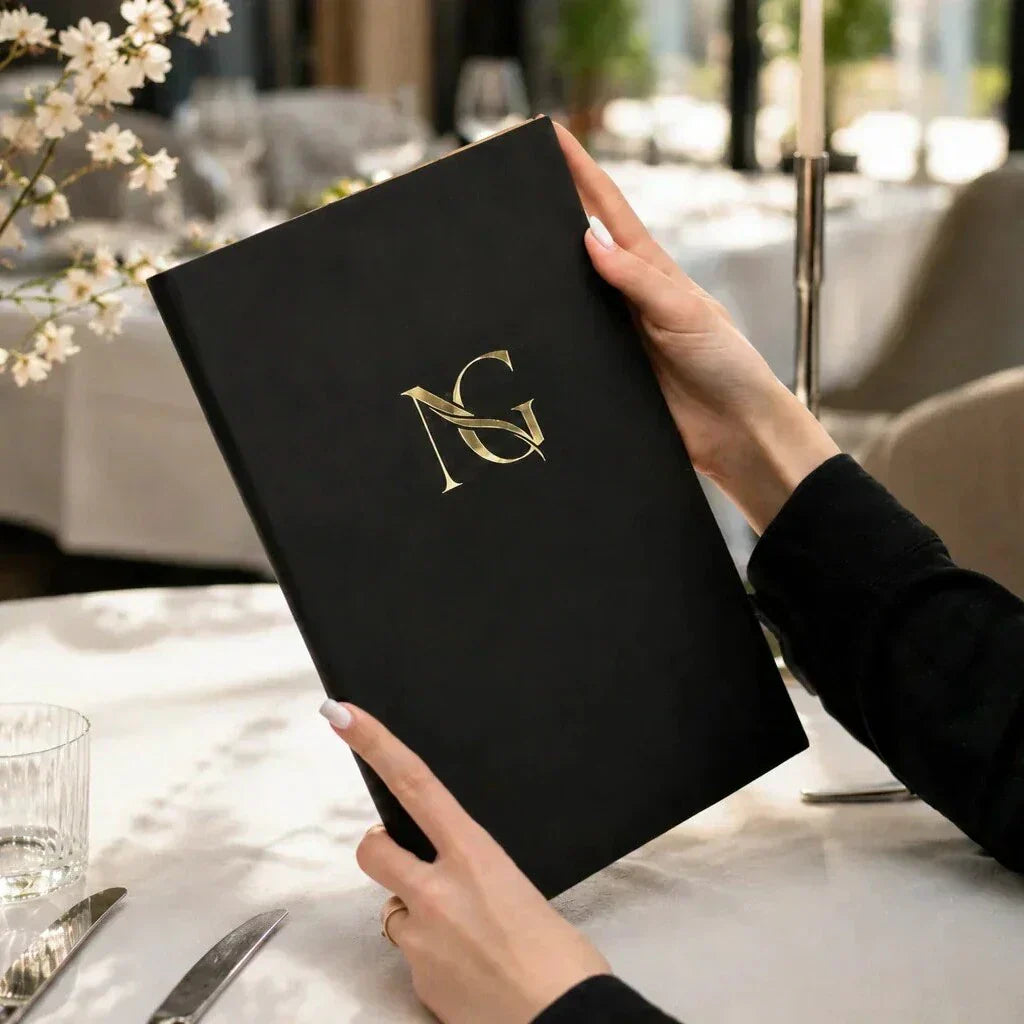
 Fabric menu covers occupy a specific and underserved position in professional hospitality. They are not trying to signal luxury the way leather does or craftsmanship the way wood does. They signal something quieter and often harder to achieve: warmth, intimacy and considered taste. In boutique restaurants, independent cafés, small hotels and tea rooms, that signal is exactly what the space is built around.
This guide covers what fabric menu covers actually are, which materials work in professional use, how they compare to leather and wood alternatives and which venue types get the most value from them.
What Makes Fabric Menu Covers Different
The difference between a fabric menu cover and a leather or wooden one is not just visual. It is tactile and atmospheric. When a guest picks up a fabric cover, the sensation is soft and slightly yielding — closer to holding a book than a folder. In a venue designed around comfort and intimacy, that sensation is consistent with everything else the space is communicating. This matters more than it might seem. Guests form impressions from every physical touchpoint: the weight of the cutlery, the texture of the napkin, the surface of the table. A menu cover made from quality textile or linen fabric fits naturally into a tactile environment built around natural materials. A leather cover in the same setting can feel slightly formal or transactional. Wood can feel rustic rather than refined.
Fabric covers also have a visual softness that suits certain interior styles better than any other material. In spaces with linen tablecloths, upholstered seating, natural fibre cushions and muted colour palettes, a fabric menu cover completes the table setting rather than standing apart from it.
The practical point: Fabric menu covers are not a compromise between leather and wood. They are a deliberate choice for specific environments. In the right setting they outperform both alternatives in terms of how naturally they integrate with the space.
Fabric Types: What InkoHoreca Actually Offers
Our fabric menu covers come in two main material categories — textile fabric and linen — each available across a range of colour options. Here is what each delivers in practice:
Textile Fabric
The core of the collection. Textile covers have a soft, structured surface that is warm to the touch and visually understated. They hold their shape well under daily service use, have reinforced stitching at stress points and a lined interior that adds body to the cover. The texture is fine and consistent across the surface, which means the cover looks clean and intentional on the table without drawing excessive attention to itself. Available in 12 colours — from neutral tones (cream, stone, grey, black) to deeper options that suit richer interior palettes. The colour range makes it straightforward to match the cover to an existing table setting or interior colour scheme.
 Best for: boutique restaurants, hotel dining rooms, café-restaurants, wine bars and any venue where the menu needs to blend into the table setting rather than dominate it.
Linen
Linen covers have a textured, natural-looking surface with a characteristic weave that gives each cover genuine visual interest without complexity. The slight grain of the surface adds warmth and authenticity that synthetic alternatives cannot replicate. It photographs particularly well — this is a material that looks considered in the hand and in images, which matters in venues where table presentation appears on social media. Natural linen has a textured, organic surface with a distinctive weave that offers visual appeal without being overly elaborate. It looks particularly good in photographs — it’s a material that looks sophisticated both in hand and in pictures, which is important in places where table settings are shared on social media
Best for: Scandinavian concepts, boutique hotels, tea rooms and farm-to-table restaurants that want the authentic look and feel of natural linen.
Wine List Formats
Several covers in the collection are produced specifically as wine list formats — narrower and shorter than a standard food menu. The A6-sized fabric wine list cover is a practical choice for venues that present the food and drink menus as separate objects. A slim fabric wine list cover alongside a textile food menu creates a coherent two-piece presentation without requiring an expensive matched set. Available formats: A4, A5, A6 (wine list), A10, US Letter, US Half Letter and custom sizes on request.
Fabric vs Leather vs Wood: An Honest Comparison
The choice between fabric, leather and wood is not about which material is better in absolute terms. It is about which material is right for a specific venue and a specific guest experience.
| Factor | Fabric (Textile / Linen) | Genuine Leather | Wood |
|---|---|---|---|
| Tactile quality | Soft, warm, textile — closest to a book | Soft, warm, slightly waxy — signals luxury | Smooth, solid, cool — signals craftsmanship |
| Atmospheric signal | Intimacy, comfort, natural living | Formality, investment, fine dining | Craft, authenticity, natural materials |
| Moisture resistance | Low to medium — blot immediately, do not soak | Medium — wipe clean, no soaking | Medium — wipe immediately |
| Structural rigidity | Low to medium — soft, flexible | Medium — can soften with heat | High — does not bend or warp |
| Branding method | DTF print — full colour or single colour | Blind, gold, copper, silver or black foil debossing | Laser engraving — permanent and highly precise |
| Maintenance | Dry brush, spot clean only — do not wash or soak | Dry wipe, condition 2–3 times per year | Dry wipe, occasional oil treatment |
| Best interior match | Natural fibre interiors, soft furnishings, linen tablecloths | Classic, formal, dark-interior, hotel dining rooms | Rustic, craft, Scandinavian, industrial |
The key takeaway: fabric is the most moisture-sensitive option and the least structurally rigid. But in a venue where those factors are not the primary concern, it offers something the other materials cannot match — a tactile and atmospheric quality that integrates with the space rather than sitting on top of it.
Which Venues Benefit Most from Fabric Menu Covers
Fabric menu covers are not a universal choice. They work in specific environments. Here is a practical guide by venue type:
Boutique Hotels and B&Bs
Small hotels and boutique guesthouses typically have dining rooms designed to feel residential rather than institutional. Natural fibre furnishings, soft lighting and a carefully curated material palette are the norm. A linen or textile menu cover in these settings reads as part of the room rather than a restaurant accessory. It contributes to the sense that this is a place where someone has thought carefully about every detail — which is exactly the message boutique hospitality is built around.
Tea Rooms and Afternoon Tea Services
Afternoon tea is the most fabric-appropriate service format in hospitality. Linen everywhere: tablecloths, napkins, chair covers, cushions. A fabric menu cover is the natural conclusion to that material language. Leather would feel too corporate. Wood would feel too casual. Fabric is simply correct.
Wine-Focused Restaurants with a European Aesthetic
Natural wine bars, bistronomie-influenced restaurants and French or Italian-inspired venues focused on provenance are strong candidates for fabric covers. These venues often reject the obvious luxury signals of leather in favour of something more personal and less transactional. A linen or textile cover in undyed cream or stone is consistent with that aesthetic.
Brunch and Café-Restaurant Concepts
Textile covers work particularly well in café-restaurant formats where the daytime atmosphere is relaxed and the brand identity is casual but considered. The soft, structured surface feels intentional without the formality of leather and warm enough to avoid the coldness of any plastic alternative.
Supper Clubs and Private Dining
Intimate dining formats — supper clubs, private dining rooms, chef's table services — benefit from menu covers that contribute to a sense of occasion without the corporate feel of traditional fine dining accessories. Textile covers in deep tones (forest green, burgundy, navy) from our 12-colour range suit these environments well.
Branding Fabric Menu Covers: DTF Printing
Branding on fabric requires a different approach than leather or wood. Laser engraving is not possible on fabric. At InkoHoreca, fabric menu covers are branded using DTF printing (Direct to Film) — the method we use for this material.
DTF printing transfers a design onto the fabric surface with precision and durability. It can be applied full-colour, which allows for detailed logos, gradients and multi-colour artwork, or single-colour for a more restrained, typographic brand mark. A single-colour DTF print in the lower corner of a linen cover has a particular considered quality that works well in boutique hotel and restaurant settings.
Worth noting: In boutique and independent restaurant settings, understated branding often outperforms bold branding. A single-colour DTF logo in the lower corner of a linen cover signals confidence rather than insecurity. The quality of the material and the precision of the print communicate the identity more effectively than covering the whole surface.
How to Care for Fabric Menu Covers
Fabric covers require more attentive maintenance than leather or wood. An important point: most of our fabric covers have a cardboard or wooden inner structure that can be permanently damaged by moisture. Do not wash or soak these covers.
Daily
- Remove surface dust and crumbs with a soft dry brush or lint roller
- Blot any spills immediately with a dry cloth. Do not rub.
Weekly
- Inspect covers for marks or dried contamination since the last check
- Spot clean with a barely damp cloth and a small amount of mild fabric cleaner if needed. Test on a hidden area first.
Periodically
- Check for any marks that need spot treatment
- Allow covers to air dry fully before returning to service
Always avoid
- Machine washing or soaking — most covers contain a cardboard or wooden inner structure that will be permanently damaged by moisture
- Bleach and chlorine-based cleaners — these strip colour and damage fibres
- Alcohol-based wipes — dry out natural fibres
- Machine drying or heat drying — causes shrinkage and distortion of the cover structure
Pairing Fabric Covers with the Rest of the Table Setting
A fabric menu cover performs best as part of a coherent table presentation. The material language of the full table setting matters more than the individual quality of any single component. Here is how to match fabric covers to the other elements of a boutique table presentation:
| Fabric Cover Tone | Pairs Well With | Hardware Finish | Interior Match |
|---|---|---|---|
| Natural linen / undyed cream | White linen napkins, ceramic tableware, simple glassware | Brass or aged gold | Scandinavian, European bistro, tea room |
| Stone / warm grey | Stone-grey linen, matte ceramic, brushed steel | Brushed silver or black | Modern minimal, Nordic, boutique hotel |
| Forest green / olive | Dark linen napkins, terracotta or earthenware, copper accents | Antique brass or copper | Garden restaurant, natural wine bar, countryside venue |
| Navy / deep blue | Crisp white linen, silver tableware, clear glassware | Silver or bright brass | Classic brasserie, private dining room, nautical concept |
If you want a fully coordinated table presentation — fabric menu covers matched with check presenters and table accessories in a consistent finish — our complete restaurant sets are the most efficient starting point. If you want to build the combination yourself, the check presenter collection includes options that pair naturally with fabric covers.
What types of fabric are used for InkoHoreca menu covers?
Are fabric menu covers practical for daily restaurant use?
How do you add a logo to a fabric menu cover?
Should fabric menu covers match the tablecloths and napkins?
How long do fabric menu covers last in professional use?
What sizes are available for fabric menu covers?

Dejar un comentario
This site is protected by reCAPTCHA and the Google Privacy Policy and Terms of Service apply.