




HoReCa Business · Budget Strategy · Menu Presentation
Starting a fast food business on a tight budget isn't about cutting corners — it's about making every dollar work harder. The right priorities from day one can mean the difference between a place that looks cheap and one that feels confidently professional.
Opening a fast food or fast-casual restaurant on a limited budget is one of the most common challenges for new hospitality entrepreneurs. You've got the concept, you've got the drive — but the numbers feel overwhelming. The kitchen equipment, the space, the staff, the marketing… where does it all fit?
Here's the thing: many successful budget fast food businesses were built not on big investments, but on smart ones. Our clients tell us the same thing time and again — they focused on what customers actually notice first, and built outward from there.
In this guide, we'll walk you through practical, field-tested ideas for launching and running a budget-friendly fast food spot without sacrificing the quality that keeps customers coming back.
The Budget Myth: Why "Affordable" Doesn't Mean "Low Quality"
Many first-time restaurant owners assume that a small budget automatically leads to a subpar experience. That assumption can become a self-fulfilling prophecy — or it can be the very thing you prove wrong.
In fast food and fast-casual dining, customers really care about three things:
| What Customers Judge | What It Actually Means | Budget-Friendly Solution |
|---|---|---|
| Taste & Consistency | Food that delivers on its promise, every time | Standardized recipes, minimal menu complexity |
| Speed of Service | Efficient flow from order to delivery | Clear layout, trained staff, streamlined menu |
| Clean & Professional Presentation | Visual trust before the first bite | Quality menu materials, organized counter, natural-material accessories |
If you deliver on all three, the size of your budget becomes far less relevant to the customer's perception.
The key insight here is that presentation shapes perception before food does. A customer walking through your door forms a judgment about quality within seconds — based entirely on what they see. A clean counter, clear menus, and professional-looking accessories tell the story you want them to believe.
Start Small, Start Smart: The Core Principles
1. Keep the Menu Focused
One of the most expensive mistakes new restaurant owners make is an overly ambitious menu. More items mean more ingredients to source, more prep complexity, more waste, and more room for inconsistency. Start with 8–15 items that you can execute perfectly. A tightly curated menu signals confidence — and it's far easier to manage on a limited budget.

2. Prioritize Location Over Size
A smaller space in a high-footfall area will almost always outperform a larger space in a quiet street. Look for locations near offices, transit hubs, universities, or shopping areas. A compact, well-organized 40–60 square meter space can run a highly efficient fast food operation.

3. Build a Lean Team
In the early days, you and one or two staff members can cover most operations. Cross-train everyone so they can handle ordering, preparation, and customer-facing work. Add people as demand actually grows, not in anticipation of it.
4. Invest in the Details That Customers Touch and See
The physical touchpoints of your space — menus, bill presenters, signage — are handled or looked at by every single customer. These are not places to cut costs invisibly. They are the places where a modest investment pays outsized returns in perceived quality.
The Power of Presentation: Why It Matters More Than You Think
Even excellent food can feel cheap if the surrounding presentation is poor. And conversely, simple, honest cooking can feel premium when the environment around it is thoughtful and well-designed.
This is what we consistently see from our clients in the HoReCa sector. The places that succeed early on a budget are not the ones that spent the least — they're the ones that spent on the right things.
| Presentation Element | Cheap Version | Smart Investment | Customer Impact |
|---|---|---|---|
| Menu Cover | Laminated paper or plastic sleeve | Leather or wooden menu cover | Signals permanence and trust before ordering |
| Wall Menu | Printed poster or chalkboard | Oak rail board with changeable letters | Looks intentional, organized, easy to update |
| Bill Presenter | Paper receipt placed on table | Wooden or leather bill holder | Elevates the closing moment of the visit |
| Counter Signage | Hand-written notes or taped paper | Structured menu board, clear typography | Reduces confusion, speeds up ordering |
| Materials | Plastic, generic materials | Natural: wood, leather, plywood | Customers associate natural materials with authenticity and quality |
Natural materials age gracefully, last for years, and signal craftsmanship — at a price that works for a new business.

Natural materials like oak wood, leather, and quality plywood have a particular advantage for budget operations: they age gracefully, they're durable, and they signal care without requiring luxury pricing on your menu. A wooden menu cover doesn't say "expensive restaurant" — it says "we pay attention." That's exactly the message a new, budget-conscious spot needs to send.
From our experience: Customers frequently associate visual order and clarity with food quality — even before they've tasted anything. A clean, well-structured space with professional accessories can completely reframe how a budget location is perceived.
Menu Presentation: Your Silent Salesperson
Your menu does more than list items and prices. It guides customer decisions, manages expectations, and communicates your brand. A poorly presented menu — hard to read, confusing in layout, or printed on flimsy material — undermines everything else you've worked to build.
Choosing the Right Menu Format
- Under 12 items: A single-page or wall board menu works perfectly. Clean and direct.
- 12–30 items: A bi-fold menu cover allows clear categorization without overwhelming the customer.
- 30–50 items: Tri-fold or a structured multi-section menu.
- 50+ items or frequent changes: Ring binder menus or removable-insert formats allow easy updates without reprinting entire menus.
Choosing tip: Count your menu items. Under 12? Single page. 12 to 30? Bi-fold. 30 to 50? Tri-fold. 50+? Multi-page booklet. Then ask: how often does the menu change? Frequent changes favor ring binders or removable inserts over fixed formats.
Menu Covers for Budget Restaurants
You don't need to spend a fortune on menu covers. What you need is a durable, intentional choice that holds up to daily use and looks professional. Here are three strong options:

- Hard Cover Leather Menu (A5) — A classic, professional look that suits cafés, bistros, and fast-casual restaurants. Durable leather withstands daily handling.
- Wooden Menu Cover — Natural wood creates a warm, artisanal feel. Great for burger spots, pizza joints, and casual eateries wanting an organic aesthetic.
- Wood & Leather Spine Menu — Wooden boards with a leather spine binding. Distinctive, durable, and genuinely eye-catching on any table.
Wall Menu Boards: Perfect for Counter-Service & Fast-Casual
If you're running a counter-service fast food concept — burgers, pizza, sandwiches, coffee — a wall-mounted menu board is the backbone of your ordering experience. It needs to be legible, well-organized, and flexible enough to handle daily specials or seasonal changes.

Wall-mounted menu boards work beautifully in cafés, coffee shops, bakeries, and fast-casual spots where the menu is visible from the counter. Changeable letter boards let you update daily specials in seconds. The key is legibility — choose a board size and letter height that guests can read comfortably from wherever they'll be standing.
- Oak Wall Menu Board with Changeable Letters — Black changeable letter board with oak rails. Works as a café board, daily specials display, or anti-Covid menu. Elegant and functional.
- Wall Hanging Menu Board (Brown Oak Rails) — Warm brown oak rail wall board. A natural, rustic aesthetic that elevates any fast-casual environment without a luxury price tag.
- HDF Letters & Oak Rails Menu Board — Modular HDF letter tiles with solid oak rails. Fast to update — ideal for menus that change with the season or daily.
Bill Presenters: Don't Overlook the Final Impression
The moment you present the bill is the last direct touchpoint of the customer experience. A scrappy paper receipt placed on the table undermines even the best meal. A clean wooden or leather bill presenter closes the loop elegantly — it tells the customer: we care about this, start to finish.

For budget operations, wooden bill holders offer exceptional value. They're durable, they look considered, and they hold up to dozens of uses a day without showing wear.
- Wooden Bill Holder R206 — Simple, clean design in natural wood. Discreet and professional for a no-fuss fast-casual setting.
- Leather Bill Holder LH08 — Soft leather finish with a refined look. Works especially well for spots aiming slightly upmarket while keeping costs controlled.
- Wooden Bill Holder R205 — Slightly wider format with a natural wood grain. Practical, handsome, and built for daily restaurant use.
Operational Ideas to Reduce Costs Without Reducing Quality
Ghost Kitchen or Shared Kitchen Space
If a full brick-and-mortar location isn't in the budget yet, consider launching as a ghost kitchen — a delivery-only or pickup-only concept operating from a rented kitchen space. This dramatically reduces overhead while letting you build a customer base and refine your menu before investing in a physical location.
Focus on Delivery and Takeaway First
Delivery and takeaway require less space, fewer staff, and lower setup costs than dine-in. Partnering with delivery platforms lets you reach customers from day one without the full infrastructure of a traditional restaurant.
Source Locally and Seasonally
Local sourcing often costs less than importing ingredients, and it gives you a genuine marketing story. Seasonal menus reduce waste and let you plan inventory more tightly.
Minimalist Interior Design
Minimalism is not a compromise — it's a choice. A clean, sparse interior with a few carefully selected materials (natural wood, concrete, white walls) can look far more intentional and premium than a cluttered space that tried to do too much.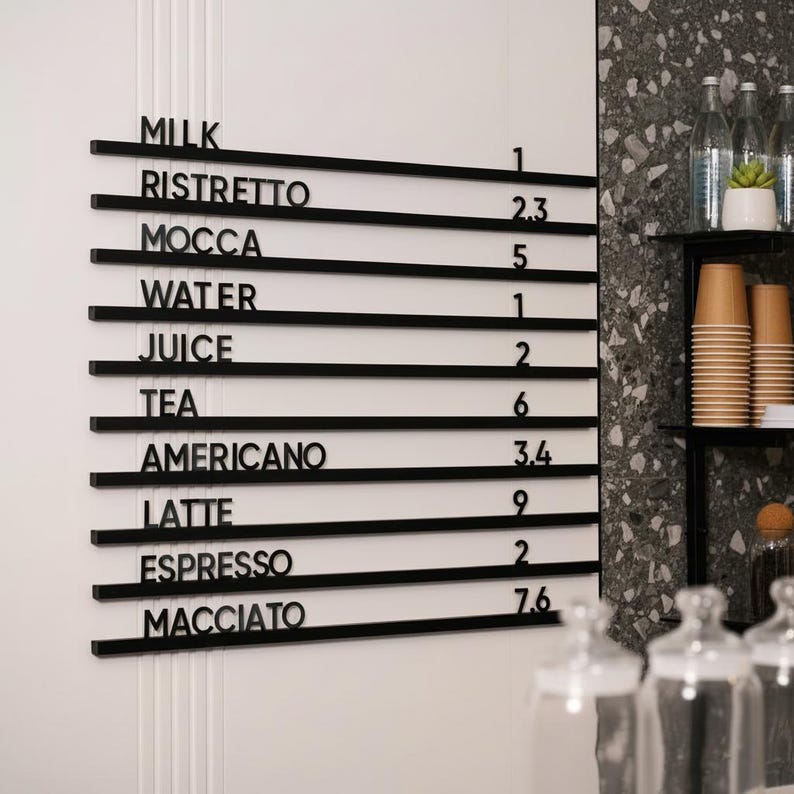
DIY Where It Makes Sense
Some elements of your setup can be built or customized yourself — chalk walls, shelving, simple signage. Where DIY makes sense, do it. Where it shows (menus, bill presenters, customer-facing materials), invest in professional-grade items that will last.
A Real Example: Outfitting a Pizzeria on a Budget
One of our clients came to us when opening a small pizzeria in a busy urban neighborhood. Their budget was tight — they needed everything to look put-together without spending as if they were launching a full-service restaurant.
They chose a combination of wooden wall menu boards for the counter area, leather menu covers for their small dine-in section, and wooden bill holders for table use. The overall investment in presentation accessories was modest — but the result looked cohesive, warm, and genuinely professional. Their early reviews frequently mentioned how "put-together" and "quality" the place felt.
That's not an accident. It's what happens when you invest deliberately in the details that customers actually experience. If you're having trouble imagining what a budget setup can look like, here is the kind of complete set one of our clients ordered for their pizzeria — quality where it counts, budget-friendly throughout:

Building a Brand Identity on a Budget
Brand doesn't require a big agency budget. It requires consistency. Pick two or three brand colors and use them everywhere. Choose a tone of voice for your menu language and social media and stick with it. Select materials and textures that reflect your concept — rustic wood for a homestyle burger joint, clean leather for a more polished concept.
When everything feels intentional, customers sense it — even if they can't articulate why. That coherence is your brand.

Social Media as a Free Marketing Channel
Before spending a cent on advertising, build your organic presence. Document the process of opening. Share behind-the-scenes preparation. Post your menu items with good lighting — natural light, a clean wooden surface, honest food photography. Authenticity performs well on social media, and it costs nothing but time.
Quick Checklist: Budget Fast Food Essentials
- Focused menu of 10–15 core items you can execute perfectly
- Clear, legible wall menu board for counter-service ordering
- Durable menu covers in natural materials (wood or leather)
- Professional bill holders — don't overlook the final touchpoint
- Consistent brand colors and materials throughout the space
- Streamlined preparation workflow to keep service fast
- Local sourcing wherever possible to reduce cost and add story
- Active social media presence from day one
Final Thoughts: Budget Is a Starting Point, Not a Ceiling
The most important mindset shift for a budget restaurant launch is this: you are not building a budget restaurant. You are building a restaurant, on a budget. The distinction matters. You're not apologizing for what you can't spend — you're making smart decisions about where every dollar goes.
Invest where customers see, touch, and experience. Keep complexity low and quality high in the kitchen. Present your concept with confidence through clean, professional materials that reflect the care you put into your food.
The entrepreneurs who succeed in budget fast food don't wait until they have more money to look professional. They look professional from day one — and that signals to every customer walking through the door that this place takes its work seriously.

From the InkoHoreca team: Starting a business with a limited budget is not about spending less — it's about setting the right priorities. Even simple elements like clean menu boards, organized counters, and professional presentation tools can completely change how customers perceive a budget space. Customers often associate visual clarity and order with quality, long before they taste the food.


Dejar un comentario
This site is protected by reCAPTCHA and the Google Privacy Policy and Terms of Service apply.