




Menu Covers · Cocktail & Bar · InkoHoreca
Cocktail Menu Covers: Designing the Perfect Drinks Presentation
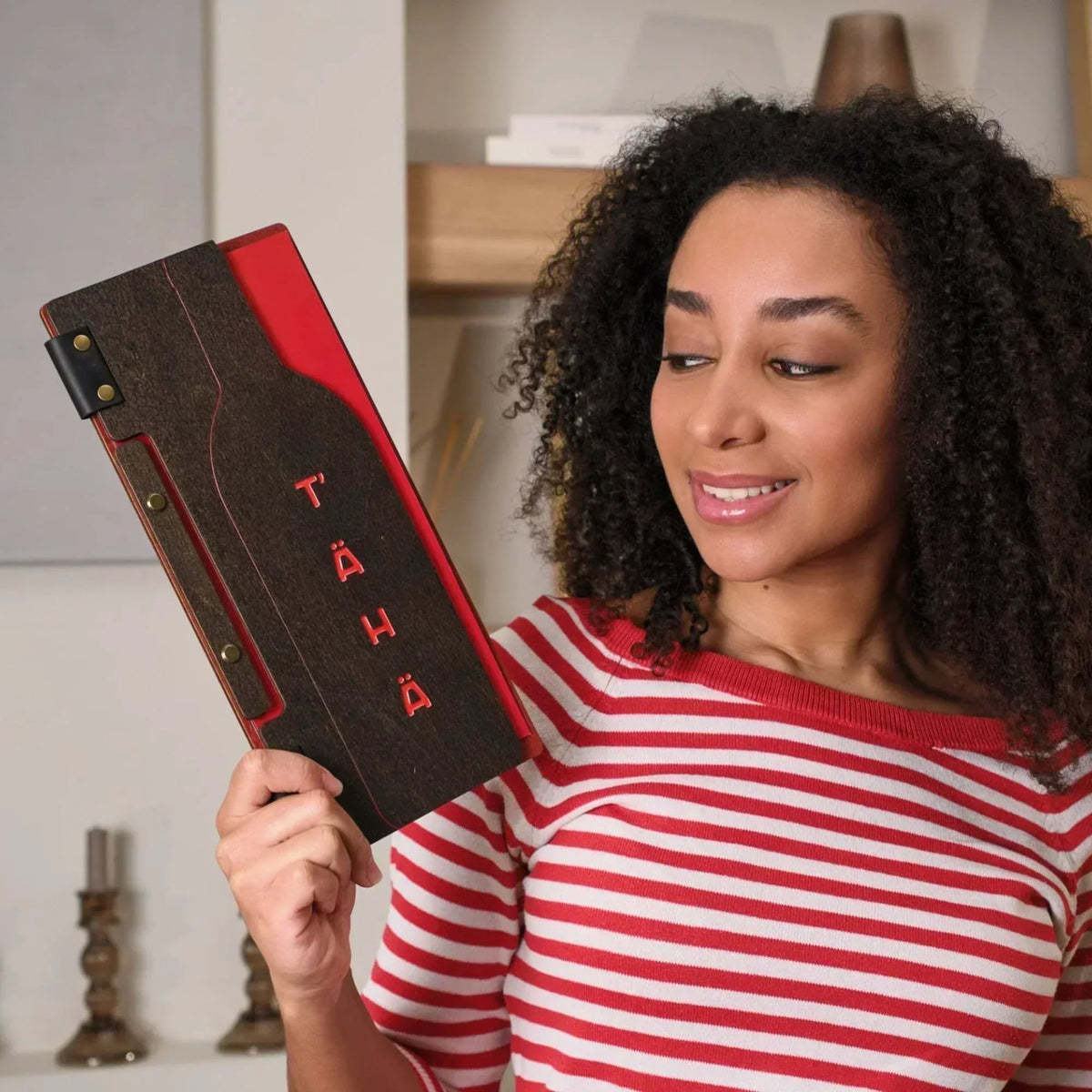
A cocktail menu is its own thing, distinct from the food menu in both purpose and environment. It's passed around in dim lighting, laid on wet bar tops, held one-handed during conversations, and evaluated in mere moments before a guest makes their choice. This means its cover must endure these challenges while setting the scene for the evening.
We are Inko Horeca, a company specializing in the manufacture of products for hotels, restaurants, and cafes. Our main product categories include menu covers and holders which can be made from wood, genuine leather, synthetic leather, or fabric, as well as QR and NFC stands that allow you to view your menu online via a phone or tablet. We create custom covers that reflect the unique character of each establishment. However, when it comes to cocktail and bar menus, a special approach is required due to their specific purpose. A cocktail menu is far from just a scaled-down version of a dinner menu: it must fit its own setting and function, which requires both thoughtful design and durable, sturdy materials.
This guide focuses on what truly sets a bar menu cover apart: choosing stain- and wear-resistant materials, selecting an intuitive layout vertical, horizontal, or square and creating pages designed for quick and easy browsing. To illustrate these principles in practice, we’ll also show how one of our clients successfully combined practicality and elegance in the design of their cocktail menu.
The Unique Challenges of a Bar Setting
Most menus cater to a traditional dining experience clean, well-lit tables where guests sit comfortably to peruse their options.
Bars, on the other hand, flip these expectations entirely. Designing a cocktail menu means adapting to the unique challenges of a dynamic, high-energy bar environment. Bars are intentionally dim to create the perfect ambiance for an evening crowd, making small fonts and cluttered designs nearly illegible. Countertops are rarely pristine; they’re often damp from condensation, occasional spills, and hurried wipe-downs that leave surfaces slightly sticky. Guests frequently find themselves standing, juggling a menu in one hand while holding a drink in the other. On top of that, menus are in constant circulation grabbed quickly, skimmed hastily, and passed along throughout the busy night.
Menu covers differ from one another based on several factors, such as: size, material, and binding type.
The following most popular sizes are available:
- For the American market: Legal (8.5 x 14 inches) / Letter (8.5 x 11 inches) / Half Letter (5.5 x 8.5 inches) / 2/3 Letter (5.6 x 11 inches) / Square (8.5 x 8.5 inches)
That stylish A4 dinner menu cover built for elegance simply won’t cut it here. A cocktail menu needs to rise to this challenge it must be functional, resilient, and adapted to thrive amidst the boisterous activity of a crowded bar.
A great cover frames your menu much like a perfectly chosen glass frames a drink. The right materials and finishes tell your guests that every detail has been considered that their entire experience matters from start to finish even before they take their first sip. Choosing the right cocktail menu cover may seem small in the grand scheme of a bustling venue. But in reality, it’s the kind of small detail that leaves big impressions. And when done right? It lifts your bar's vibe and your guest's experience.
Spill Resistance Comes First
Spill Resistance Takes Priority The most vulnerable part of any menu isn't the protective cover it's the printed insert inside. While leather or PU covers can be wiped clean in just seconds, the paper within is far less forgiving. In bustling bar environments, this paper is often the first casualty of spills and stains.
The good news is that a quality cover takes the hit instead. Leather or PU materials allow for quick cleanup, ensuring that an external splash never becomes a lasting issue. Typically, the printed insert is securely held in place by mechanisms like screws and planks, corner mounts, or metal binders depending on the design. These systems not only keep the pages flat and tidy but also make it easy to swap out inserts whenever updates to the menu are needed, all without having to replace the cover itself.

For establishments where the bar environment tends to be warm and damp, protecting printed materials is a critical consideration. To address this, a transparent protective sleeve can be added over the insert, serving as an effective shield. While this sleeve is not included by default, it can be incorporated upon request. Simply specify this requirement when placing your order, and suitable accommodations will be arranged to ensure optimal functionality for your cover design. As illustrated in the client example provided later in this text, this solution has proven effective under these conditions.
The choice of cover material is another essential factor to consider. For settings that involve frequent exposure to moisture, materials such as polyurethane (PU) leather are a practical pick because they're light and wipe clean fast. They also stand up to heavy use, which matters in a busy bar. On the other hand, genuine leather offers a more luxurious look that suits high-end lounges and hotel bars. It does need more careful handling to prevent moisture damage. For further details, refer to our comprehensive comparison between PU leather and genuine leather to determine the most suitable option for your specific needs.
The subtle benefit lies in the swappable insert: allowing a seasonal cocktail update to require just a single sheet of printed paper rather than an entire set of new covers. For a bar refreshing its menu several times a year, the savings add up quickly.
Why square works for drinks
It separates the drinks from the food. Guests are generally provided with two distinct menus: a vertically oriented, portrait-style food menu and a square-shaped drinks menu. The contrasting formats ensure immediate visual differentiation, enabling the cocktail menu to capture attention on a crowded table without necessitating additional inquiries.
It uses space efficiently. Bar tops and small high tables are tight. A full portrait menu opened flat takes up real estate and crowds plates and glassware. A square cover stays compact even when open, so it sits neatly beside a drink rather than competing with it.
It's comfortable one-handed. A square distributes its weight evenly, so it doesn't flop or fold when held in one hand exactly how a cocktail menu gets read while standing at the bar or during an event.
It gives the page a cleaner grid. A square suits either one hero cocktail with a large illustration, or a tidy column of three to four items. The eye settles toward the centre instead of scanning down a long portrait column, which makes the list faster to read.
It feels premium and relaxed. The square format reads like a quality magazine or a gift album — modern, unfussy, and suited to an evening mood far more than a bulky office-style folder.
Portrait still has a place for thicker cocktail booklets and longer lists that need several pages, and landscape suits the occasional wide, image-led layout. But for most bars, square is the sweet spot.
Designing the Page: Less Text, More Silence
One of our clients had a large cocktail list and an easy way to get it wrong cram everything onto the page. Instead, they did the opposite. They kept the text minimal, drew each drink as a simple 2D illustration, and left deliberate negative space around the items. That "visual silence" is what lets a guest land on what they want almost instantly, without reading every line.

It works because everything about a bar pushes in the same direction. In low light, a sparse page reads faster than a dense one. Illustrations carry recognition where small type fails. And negative space quietly signals confidence, - a list that isn't trying to sell every drink at once feels more considered.

In practice, that means three to four items per page, one short line of description, a clear price, and an icon or illustration per drink. The instinct to fit the whole list on a single sheet is the thing to resist let the cover hold a few pages instead.
Portrait vs Landscape vs Square: Quick Comparison
| Square | Portrait | Landscape | |
|---|---|---|---|
| Best for | Curated cocktail lists | Longer multi-page booklets | Wide, image-led layouts |
| Footprint when open | Compact | Tall, takes space | Wide, takes space |
| One-handed handling | Excellent, balanced | Tends to flop | Awkward to hold |
| Reads as separate from food | Immediately | Looks similar to food menu | Distinct but bulky |
| Design feel | Magazine-like, modern | Classic, formal | Editorial, spacious |
A cocktail list isn't the only drinks menu on the table. If you're building a full set, it's worth matching covers across categories see our wine menu covers for the wine list and our drinks menu covers for soft drinks and non-alcoholic options.
Branding the Cover
The cover is seen closed on the bar far more often than it's seen open, so the front is where your logo earns its place. On PU and fabric covers, DTF print reproduces a full-colour mark cleanly and holds up to wiping. On genuine leather, debossing or foil stamping in gold, copper, silver, or black gives a tactile, durable finish that becomes part of the material.


For a bar, restraint reads as quality. A single logo on the front blind debossed or in one foil colour usually does more than a heavily decorated cover. The printed insert inside is where the colour and illustration live; the cover just frames it.
⚠️ The fastest way to ruin a bar menu is harsh cleaning spray on the cover and a soaked insert. Wipe the cover with a damp cloth rather than soaking it, keep solvents away from PU, and lift the insert out before any deeper clean.
Which Format for Your Venue
A cocktail bar or lounge with a curated, signature list is the clearest case for a square cover in PU or leather with an illustration-led page and an optional protective sleeve if the bar runs wet. A high-volume bar with a long, frequently changing list is better served by a square or portrait booklet in PU or fabric, with swappable inserts that make updates cheap. A hotel bar or fine-dining room leans toward genuine leather with a foil logo, square or portrait depending on the rest of the table setting.
In every case the logic is the same: protect the print, keep the format compact and one-hand friendly, and design the page so a guest can choose a drink in seconds rather than read a wall of text.
📌 Related Reads:
Putting together a drinks list for your bar? Browse the collection, or get in touch and we'll help you find the right cover for your concept and order size.
Shop Cocktail Menu Covers Contact UsWhat size should a cocktail menu cover be?
How do I protect a cocktail menu from spills?
Is portrait or landscape better for a cocktail menu?
What material is best for a bar menu cover?
Can I print illustrations on my cocktail menu?


Dejar un comentario
This site is protected by reCAPTCHA and the Google Privacy Policy and Terms of Service apply.