




Materials & Care · Menu Covers · InkoHoreca
PU Leather vs Real Leather Menu Covers: Which One Actually Lasts Longer?
The material your menu cover is made from affects more than how it looks on day one. It determines what it looks like after six months of daily handling, how it responds to cleaning, and what you'll actually spend per year to keep the table looking right.
At InkoHoreca, we make menu covers from both genuine leather and PU leather, and we get questions about the difference regularly. Most come down to the same thing: which one holds up better, and is the price gap worth it?
We'll cover how each material performs in a working restaurant, what branding options are available, and how to think about the cost over time.
What You're Actually Comparing
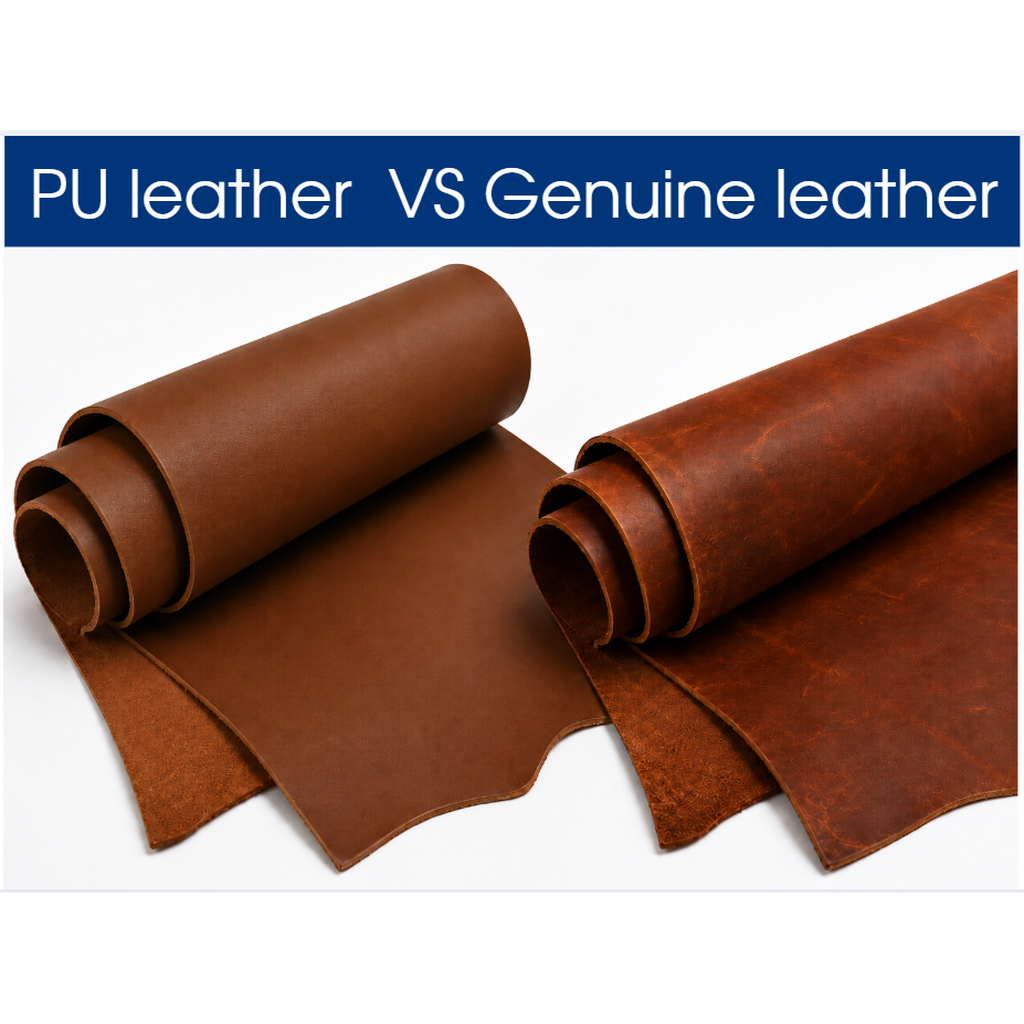
Real leather menu covers are made from animal hide, most commonly full-grain or top-grain leather. The two most common types in hospitality are Capri leather, which has a smooth and consistent finish, and Crazy Horse leather, which has a natural waxy texture that changes with use and develops a patina over time. Both are dense, flexible materials with natural variation in grain and colour.
PU leather, also called faux leather or synthetic leather, is a fabric base coated with a layer of polyurethane. The coating is what gives it the leather-like appearance and texture. Better-quality PU uses a thicker coating and a tighter base fabric, which affects how long it holds up. Lower-quality versions use a thinner coating that starts to crack and peel within months under daily use.
They look similar in a product photo. In person, and especially after a year of use, they tell a very different story.
How Each Material Holds Up in a Restaurant
Menu covers take a lot of handling. They're picked up and put down dozens of times a day, wiped down with damp cloths, occasionally splashed, and stacked at the end of service. The material needs to handle all of that without looking worn within a season.
Genuine leather
Full-grain and top-grain leather become more durable with use, not less. The natural oils in the hide give it flexibility that doesn't degrade the way a synthetic coating does. Crazy Horse leather in particular develops a patina as it's handled. The surface darkens slightly at points of contact, which most people read as character rather than wear. Based on orders we've fulfilled and the feedback we get, genuine leather covers in working restaurants typically last five to eight years before anyone considers replacing them.
The one thing to watch is moisture. If leather stays wet for a long time, or gets cleaned regularly with something acidic or alcohol-based, it dries out and eventually cracks. A leather conditioner applied every few months prevents this entirely.
PU leather
Good-quality PU holds up well for one to three years. It's easy to wipe down, doesn't need conditioning, and tolerates mild cleaning products without issue. For venues that want something low-maintenance, this matters.
The problem is what happens when the coating starts to go. Heat, friction, and the wrong cleaning product all accelerate this. The surface gets small cracks first, then the coating starts to lift at the edges. Once that starts, there's no fixing it. Budget PU can reach this point within eight to twelve months. Better-quality PU usually lasts two to three years before it becomes visually obvious.
Worn leather vs peeling PU: a leather cover that's two years old looks used in a way that usually reads as quality. A PU cover that's peeling just looks like it needs to go in the bin. That difference matters when it's sitting on a guest's table.
Genuine Leather vs PU Leather: Quick Comparison
| Genuine Leather | PU Leather | |
|---|---|---|
| Expected lifespan | 5–8 years+ | 1–3 years |
| How it ages | Develops patina, improves with use | Coating degrades, eventually peels |
| Moisture resistance | Moderate, needs conditioning | Good, wipes clean easily |
| Cleaning | Damp cloth, pH-neutral products only | Most mild cleaners safe |
| Feel in hand | Warm, substantial, natural variation | Smooth, consistent, lighter |
| Branding options | Debossing, foil stamping | UV print, DTF print |
| Price per unit | Higher upfront | Lower upfront |
| Sustainability | Animal product, long lifespan | Petroleum-based, shorter replacement cycle |
What It Actually Costs Per Year
Genuine leather costs more upfront. That's just true. But the per-unit price is only part of the calculation.
If a leather cover lasts six years and a PU cover lasts two, you buy the PU version three times in the same period. The annual cost often comes out roughly even. In high-traffic venues where PU wears faster, leather ends up cheaper per year. And that's before factoring in the time it takes to reorder, wait for production, and brief staff on the new batch every time covers need replacing.
PU still makes sense in specific situations. If you rebrand seasonally, or if your concept involves changing covers every year intentionally, the lower upfront price works in your favour. Just go in knowing the actual replacement cycle rather than assuming it matches the best-case lifespan.
Branding: What Works on Each Material
The material also determines what you can do with your logo, so it's worth knowing this before you decide.
Genuine leather takes debossing well. The die presses into the hide and the impression becomes part of the material. Blind debossing is subtle and tactile. Foil stamping in gold, silver, copper, or black makes the logo legible at a distance and in low light. Neither fades or peels because neither sits on the surface. UV print and DTF aren't suitable on natural leather — the oils and flex of the hide work against ink bonding over time.
PU leather works best with DTF print. It bonds well to synthetic surfaces, reproduces full-colour logos with fine detail, and holds up to regular wiping. UV print works on some PU surfaces too, though results vary more by material. Debossing isn't practical on PU — the coating doesn't compress cleanly the way hide does.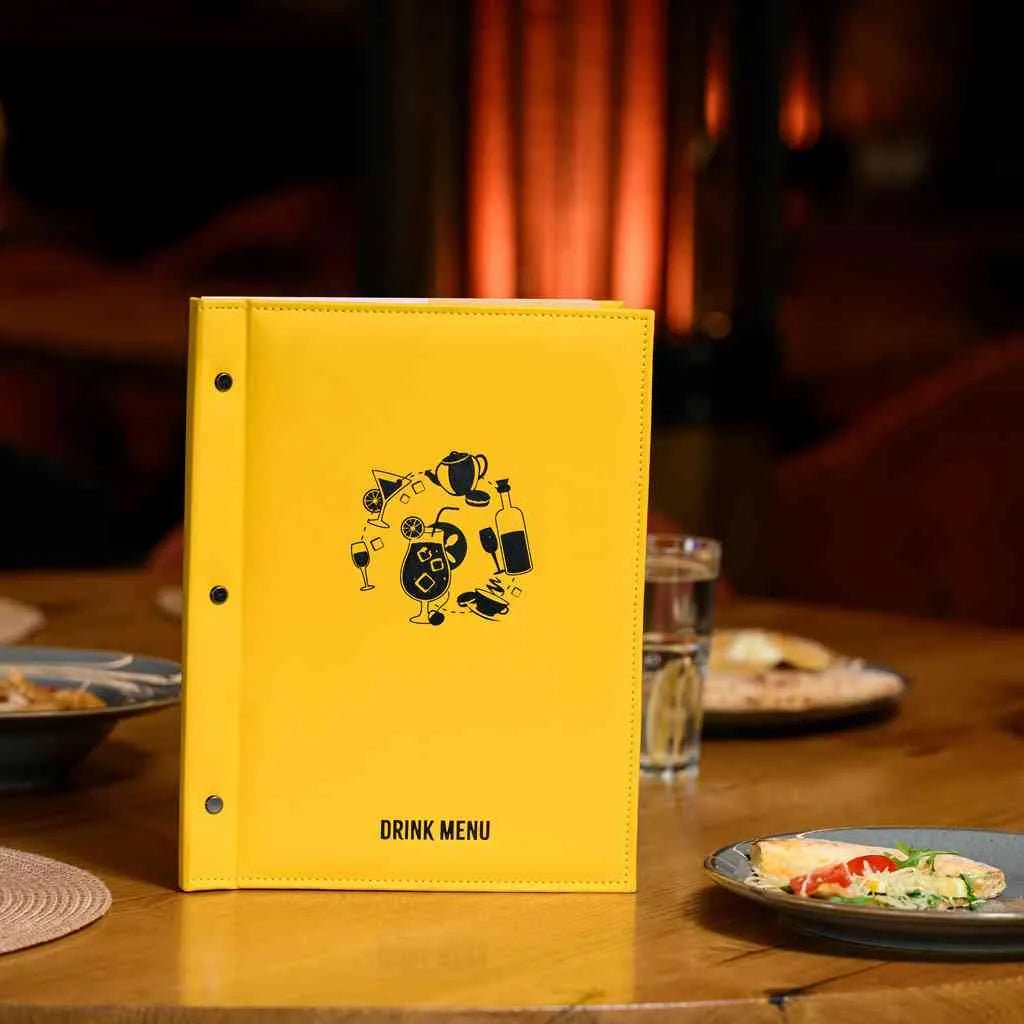
Multi-colour logo? PU with DTF is usually the more practical route. Full CMYK, no simplification needed. On genuine leather, a multi-colour mark either needs to be simplified for debossing or handled differently — we'll usually talk through the options before anything gets made.
On Sustainability
PU leather is a petroleum product. When a cover reaches the end of its life, the polyurethane coating doesn't biodegrade — it goes to landfill. And because PU covers need replacing more often, the waste per venue adds up over time.
Genuine leather is an animal product, which has its own considerations. But on the specific question of waste, one leather cover lasting six years produces less landfill than three PU covers over the same period. Neither option is clean, but longevity is a real factor in how much material ends up being discarded.
Which One to Choose
Two questions usually settle it: how long do you need these covers to last, and does your logo work in a single colour?
Genuine leather makes sense for mid to upper-market venues, for covers that guests are meant to notice, and for operations where replacing covers every couple of years isn't worth the overhead. The higher unit price tends to work out over the lifespan. Crazy Horse in particular suits venues where the material itself is part of the atmosphere.
PU leather makes sense when the budget for the initial order is tight, when covers are replaced regularly as part of a seasonal rebrand, or when the logo has multiple colours that would need to be simplified for debossing. It's a workable material at the right price point — just account for the replacement cycle when you're calculating the total cost.
Fast-casual venues and high-volume operations often land on PU not because leather is out of reach, but because a two-year replacement cycle fits how they operate anyway. A hotel bar expecting the same covers for five years is a different situation entirely.
Cleaning and Storage
Genuine leather: wipe with a slightly damp cloth. For anything stubborn, use a pH-neutral soap. Apply conditioner every three to four months, more often if the space is dry or heavily air-conditioned. Don't stack wet covers — moisture trapped between them is one of the more common causes of early cracking.
PU leather: most mild cleaning products are fine. Avoid alcohol, acetone, and anything solvent-based — these break down the coating faster than normal wear does. Skip abrasive cloths. Store flat or upright rather than folded under weight.
⚠️ The single most common cause of early PU failure in restaurants is harsh cleaning products used by staff who don't know they're damaging the covers. A short note in the cleaning protocol goes a long way. More on leather care: Professional Guide to Genuine Leather Care for Restaurants and Cafés
📌 Related Reads:
Still deciding? Browse both collections and contact us if you need a recommendation based on your concept.
Browse Leather Menu Covers Browse PU Leather CoversHow long does a PU leather menu cover last in a restaurant?
Is genuine leather worth the higher upfront cost?
Can you put a logo on a PU leather menu cover?
Why does my PU leather menu cover start peeling?
Which is more sustainable: genuine leather or PU leather?


Dejar un comentario
This site is protected by reCAPTCHA and the Google Privacy Policy and Terms of Service apply.