




Branding · Personalization · InkoHoreca
Custom Menu Covers with Logo: Debossing, Laser Engraving, or UV Print - Which One Do You Actually Need?
A logo on a menu cover isn't just decoration. It's the first physical thing your brand says to a guest. Before anyone reads a single dish, they've already touched your identity and what that touch communicates depends entirely on how the logo got there.
At InkoHoreca, we personalize menu covers every day - for hotel groups, independent wine bars, fast-casual chains, and fine dining restaurants. The question we get most often sounds something like: "What's the difference between these methods, and which one do I need?"
This guide gives you a straight answer. We'll go through how each technique works, what it actually looks like in use, which materials it suits, and what it costs per unit. By the end, you'll know what fits your cover, your logo, and your brand.
Debossing: The One Guests Feel Before They See
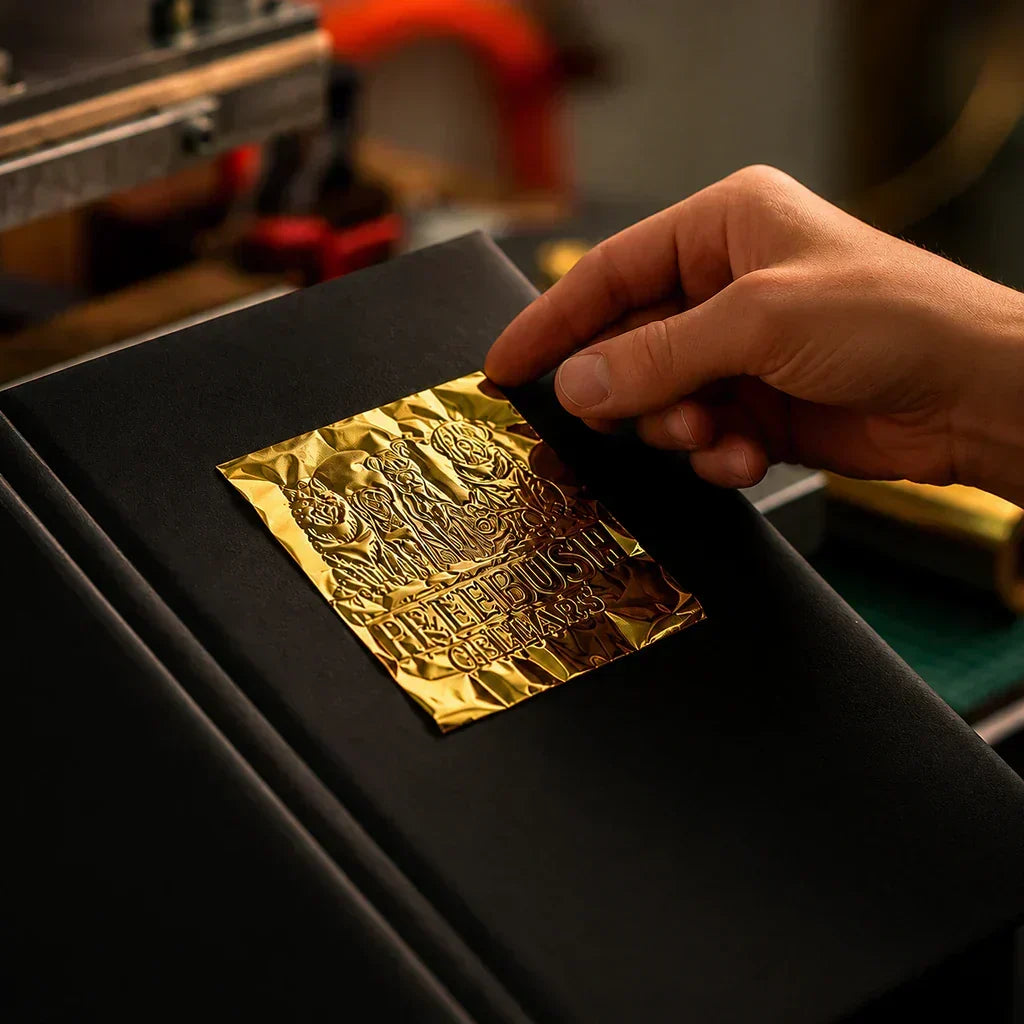
Debossing presses your logo into the material using a custom-cut metal die under heat and pressure. The result is a recessed impression - no ink, no coating, just depth pressed into the surface.

On genuine leather, this is the most premium result you can get. The impression catches light differently depending on the angle - on Crazy Horse leather especially, the texture around the debossed area creates a shadow that shifts as the cover moves. It looks expensive because it is expensive to do properly: a metal cliché has to be made to your exact artwork before a single cover can be stamped.

Blind debossing - no color - works when understatement is the whole point. Foil stamping in gold, silver, copper, or black is the right call when the logo needs to be readable across a dimly lit table. Both are permanent. Neither peels, fades, or wears down.

Worth knowing: The metal die is a one-time cost. Once it exists, it gets reused on every reorder - which means debossing gets cheaper per unit the more covers you order over time. For restaurants that replace covers seasonally, this adds up quickly.
One honest limitation: debossing works best with logos that are relatively clean and simple. Very fine lines under 0.3 mm, delicate hairline type, and intricate illustrated detail tend to lose crispness under the die. If your logo is bold and clear, debossing will do it justice. If it's complex and multi-layered, keep reading.
Laser Engraving: Permanent by Definition
Laser engraving removes material instead of adding or pressing it. A focused beam burns your logo directly into the structure of the cover - wood, plywood, or HDF to a precise depth. There's nothing on the surface to scratch or peel, because there's nothing on the surface at all.

On oak, pine, or birch plywood, the engraved area typically burns to a warm dark brown or near-black against the lighter grain around it. It looks like it belongs to the material. It's also tactile in a different way to debossing you can feel the slight recess when you run a finger across it.

Laser handles detail that debossing can't. The minimum line width is 0.3 mm, which is precise enough for complex logotypes, fine serif typefaces, and intricate emblems. It's a natural fit for brands where precision is part of the identity: architecture-influenced concepts, design-led restaurants, wine programs with elaborate crest-style marks.
One limitation: Laser engraving produces a single-tone result the color of the burned material. If your logo needs two or more colors to read correctly, laser alone won't get you there. You can pair it with a spot of UV print for a color element, or work with a simplified single-color version of the mark.

UV Print: When Color Is Non Negotiable
UV printing applies ink directly to the cover surface and cures it instantly under ultraviolet light. The bond is molecular the ink doesn't sit on top of the material so much as it fuses with it. The result is flat, photo sharp, and capable of reproducing the full CMYK spectrum without any simplification.
This is the right method when the brand identity genuinely depends on color illustrated logos, gradient marks, multi-color emblems that would lose their meaning if converted to monochrome. It's also the right call when the logo has fine detail that would be compromised by the die making process debossing requires.

UV print works best on fabric covers, natural linen, and sealed plywood. On genuine leather, adhesion over time is less reliable the natural oils and flexibility of the material work against a rigid ink layer. For leather covers with complex color logos, we'll usually want to talk through the design before committing to a method.
⚠️ To keep UV print looking sharp for longer, avoid harsh chemicals, abrasive wipes, solvents, and heavy scrubbing on the printed area.
DTF Print: The Better Answer for Textile Covers
Direct to Film printing works differently: the image is printed onto a transfer film first, then heat-pressed onto the cover. The result is smooth, vibrant, and opaque even on dark or heavily textured textiles where UV ink might struggle to bond cleanly.

DTF is the reliable option for fabric menu covers, faux leather, and natural linen when full color is required. It handles gradients and fine linework without the constraints you run into with debossing or laser. The surface stays completely smooth to the touch there's no tactile dimension, but the color fidelity and durability under daily restaurant handling are solid.
Side-by-Side: How the Four Methods Compare
| Debossing | Laser Engraving | UV Print | DTF Print | |
|---|---|---|---|---|
| What you see | Recessed impression | Dark burned mark | Full-color flat print | Smooth opaque color transfer |
| What you feel | Deep tactile depth | Slight recess, slightly textured | Barely raised | Completely flat |
| Ideal material | Genuine leather | Wood, plywood, HDF | Fabric, linen, sealed plywood | Fabric, faux leather |
| Color options | Blind / Gold / Silver / Copper / Black foil | Material color only | Full CMYK | Full CMYK |
| Logo complexity | Simple to moderate | Simple to highly detailed | Any | Any |
| Durability | Permanent | Permanent — cannot be removed | Very high | High |
| Setup required | Metal die (one-time) | Vector file only | Vector or high-res file | Vector or high-res file |
| Included in price? | ✓ Up to 100 cm² | ✓ Up to 100 cm² | ✓ Up to 100 cm² | ✓ Up to 100 cm² |
Match the Method to the Material
The cover material narrows the decision more than anything else. Here's how we think about it:
Genuine leather (Capri, Crazy Horse): Debossing. Blind for understated luxury, foil when the logo needs to be visible in low light. UV and DTF aren't recommended on natural leather - the surface flexibility and oil content work against long-term ink adhesion.
Wood and plywood: Laser engraving as the first choice. UV print as a supplement if you need color. The two can be combined - engrave the primary mark, UV print a color element alongside it.
HDF hardcover models: Laser engraving. The dense board takes the beam cleanly and produces near-precise results with strong contrast between the engraved area and the surrounding surface.
Fabric and natural linen: UV print or DTF print. DTF is usually the better pick for dark or heavily textured fabrics where UV adhesion can be uneven.
Faux / PU leather: DTF. The heat-transfer process bonds more consistently to synthetic surfaces than UV curing does.
⚠️ To keep UV print looking sharp for longer, avoid harsh chemicals, abrasive wipes, solvents, and heavy scrubbing on the printed area.
What It Costs: Price Per Unit Breakdown
InkoHoreca's pricing is transparent: logo application up to 100 cm² is built into the product price - no separate branding fee for standard-size logos. Here's the full picture:
| Cover type | Starting price / unit | Recommended method | Logo included |
|---|---|---|---|
| Wooden menu covers | Laser engraving | ✓ up to 100 cm² | |
| Hardcover wooden covers | Laser engraving | ✓ up to 100 cm² | |
| Leather menu covers | Blind debossing | ✓ up to 100 cm² | |
| Leather hardcover covers | Blind or foil debossing | ✓ up to 100 cm² | |
| Fabric menu covers | Contact us for quote | UV print / DTF print | ✓ up to 100 cm² |
| Foil stamping upgrade | Individual quote | Gold / silver / copper / black | + Die production (one-time) |
| Logo over 100 cm² | Surcharge applies | Any method | Quoted on mockup review |
The metal die for debossing is a one-time cost. Once made, it's stored and reused on every reorder at no extra charge. For a restaurant replacing covers once or twice a year, the die cost disappears quickly - by the second or third order it's essentially not a factor.
Volume discounts go up to 25% on larger orders, starting from 10 units. The economics shift noticeably at scale.
Every logo gets reviewed before production starts. We check complexity, dimensions, and placement, then confirm the final cost before any work begins.
What We Need From You: Logo File Requirements
The format and quality of your logo file affects how quickly we can move - and how sharp the final result will be.
Technical requirements
- Accepted formats: .AI, .EPS, .SVG, .PDF (vector only)
- For laser engraving and debossing: 100% black - no gradients, no gray tones. The machine reads black as the work area; anything else is ignored.
- For UV and DTF: Full-color vector with CMYK values. High-resolution raster (300 DPI+) accepted as a reference.
- Fonts: Convert to outlines before sending. If the font isn't embedded, the file won't render correctly on our end.
- Minimum line weight: 0.3 mm. Thinner lines burn away on wood or close during debossing. For DTF, the minimum is 0.8 mm.
- Minimum logo size: 2 cm on the shortest side.
If you only have a JPG or PNG - a photo of a business card, a screenshot from your website - send it anyway. For clean black-and-white files, we trace it into a vector at no charge. For complex or low-quality images that need redrawing from scratch, we'll talk through it before doing anything. Production doesn't start until you've approved the artwork.
Three Restaurants, Three Right Answers
The same question - "which method?" - gets a different answer depending on who's asking. Here are three real situations:
A wine bar, minimal wordmark, black Crazy Horse leather. The client wanted nothing to compete with the leather itself - no foil, no color. Blind debossing. The impression lives in the surface without drawing attention to itself. Guests run their fingers over it without quite knowing why. That's the whole idea.

A Scandinavian-concept cafe, handwritten script logo, preference for natural materials. Light birch plywood covers, laser engraved. The burned line weight matched the hand-drawn feel of the logo exactly. After a year of daily use, the engraving looked the same as the day the covers were made - because it literally is the material, not a surface treatment.

A cocktail bar, full-color illustrated logo a hand drawn character with five distinct colors and fine crosshatched shading. Converting it to monochrome for engraving or debossing would have gutted the whole identity. UV print on fabric covers reproduced every line and tone exactly as designed. The menus became something guests photographed and shared - which for a bar with that kind of brand, was exactly the goal.
Ready to order?
Custom Menu Covers with Logo - per Unit, Branding Included
No hidden branding fees for logos up to 100 cm². Worldwide shipping. Volume discounts up to 25%. Trusted by Marriott, Hilton, Hyatt and hundreds of independent restaurants.
Browse Custom Menu Covers Ask a Designer📌 Related Reads:
Which branding method for custom menu covers is the most durable?
Is logo branding included in the price, or charged separately?
My logo has multiple colors. Can it go on a leather cover?
I only have a PNG of my logo. Is that a problem?
Is there a minimum order quantity?


Dejar un comentario
This site is protected by reCAPTCHA and the Google Privacy Policy and Terms of Service apply.